CAS 15861-05-9
:Fluoramide
Description:
Fluoramide, with the CAS number 15861-05-9, is an inorganic compound characterized by the presence of fluorine and nitrogen in its molecular structure. It typically appears as a colorless or white solid and is known for its hygroscopic nature, meaning it can absorb moisture from the environment. Fluoramide is soluble in water and polar organic solvents, which enhances its reactivity in various chemical processes. This compound is primarily recognized for its role as a reagent in organic synthesis and as a potential intermediate in the production of fluorinated compounds. Its chemical behavior is influenced by the electronegativity of fluorine, which can affect the stability and reactivity of the nitrogen atom. Safety considerations are important when handling fluoramide, as it may pose health risks through inhalation or skin contact. Overall, fluoramide serves as a valuable compound in both industrial applications and research settings, particularly in the field of fluorine chemistry.
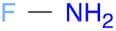
Formula:FH2N
InChI:InChI=1S/FH2N/c1-2/h2H2
InChI key:InChIKey=MDQRDWAGHRLBPA-UHFFFAOYSA-N
SMILES:FN
Synonyms:- Fluoroamide
- Fluoramide
- Fluoroamide (NH2F)
- Fluoramine
- Monofluoroamine
- Fluoroamine
Sort by
Purity (%)
0
100
|
0
|
50
|
90
|
95
|
100
Found 2 products.
Monofluoroamine
CAS:Controlled Product<p>Monofluoroamine is a chemical substance with the chemical formula NH2F. It is a colorless liquid that is stable to both acidic and basic environments, but reacts with fluorine gas to form hydrofluoric acid. Monofluoroamine is used in the synthesis of pharmaceuticals, pesticides, and other organic compounds. This compound can be prepared by reacting ammonia with hydrogen fluoride at low temperature or by reacting ammonia with hydrogen fluoride at high pressure. The Friedel-Crafts reaction of monofluoroamine with an amide produces the corresponding amine. Monofluoroamine has been used as a conditioning agent in NMR spectroscopy experiments to remove the water signal from complex NMR spectra. In addition, this compound has been shown to have antiviral effects against HIV infection through its ability to inhibit protein synthesis.</p>Formula:FH2NPurity:Min. 95%Molecular weight:35.02 g/mol