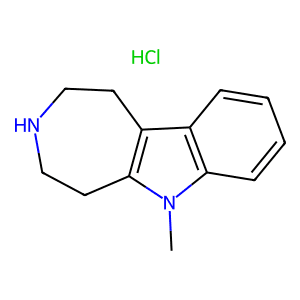
![Azepino[4,5-b]indole,1,2,3,4,5,6-hexahydro-6-methyl-, hydrochloride (1:1)](/_next/image/?url=https%3A%2Fstatic.cymitquimica.com%2Fcas-image%2Fthumb-webp%2F387262-azepino-45-b-indole-123456-hexahydro-6-methyl-hydrochloride-1-1.webp&w=3840&q=75)
CAS 15923-42-9
:Azepino[4,5-b]indole,1,2,3,4,5,6-hexahydro-6-methyl-, hydrochloride (1:1)
Description:
Azepino[4,5-b]indole, 1,2,3,4,5,6-hexahydro-6-methyl-, hydrochloride (1:1) is a chemical compound characterized by its complex bicyclic structure, which includes both azepine and indole moieties. This compound features a saturated hexahydro framework, contributing to its stability and potential biological activity. The presence of a methyl group at the 6-position of the hexahydro component may influence its pharmacological properties, including receptor binding and metabolic pathways. As a hydrochloride salt, it is typically more soluble in water, enhancing its bioavailability for pharmaceutical applications. The compound is of interest in medicinal chemistry due to its potential therapeutic effects, which may include neuroactive properties. Its CAS number, 15923-42-9, allows for precise identification in chemical databases and literature. Safety and handling precautions should be observed, as with all chemical substances, particularly in research and industrial settings. Further studies are necessary to fully elucidate its mechanisms of action and potential applications in drug development.
Formula:C13H16N2ClH
Synonyms:- Azepino[4,5-b]indole,1,2,3,4,5,6-hexahydro-6-methyl-, monohydrochloride (8CI,9CI)
- Pnu 186053A
Sort by
Purity (%)
0
100
|
0
|
50
|
90
|
95
|
100
Found 4 products.
1,2,3,4,5,6-Hexahydro-6-methyl-azepino[4,5-b]indolehydrochloride
CAS:Formula:C13H17ClN2Purity:97%Color and Shape:SolidMolecular weight:236.7405PNU 22394 hydrochloride
CAS:PNU 22394 hydrochloride is a 5-HT2C agonist and partial 5-HT2A/5-HT2B agonistFormula:C13H17ClN2Purity:97.83%Color and Shape:SolidMolecular weight:236.74PNU 22394 hydrochloride
CAS:PNU 22394 hydrochloride is a 5-HT2B receptor agonist that has been shown to have muscle-damaging properties. It binds to the 5-HT2B receptor and activates it, leading to the production of serotonin and activation of the damaged muscle cells. PNU 22394 hydrochloride has been shown to be effective in animal models of acute muscle injury, but not in models of chronic muscle damage.Formula:C13H16N2·HClPurity:Min. 95%Molecular weight:236.74 g/mol
![1,2,3,4,5,6-Hexahydro-6-methyl-azepino[4,5-b]indolehydrochloride](/_next/image/?url=https%3A%2Fstatic.cymitquimica.com%2Fproducts%2FIN%2Fthumb%2FDA01ENQ0.jpg&w=3840&q=75)