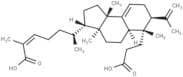
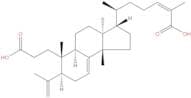
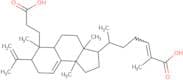
CAS 159623-48-0
:3,4-Secotirucalla-4(28),7,24-triene-3,26-dioic acid
Description:
3,4-Secotirucalla-4(28),7,24-triene-3,26-dioic acid, identified by its CAS number 159623-48-0, is a complex organic compound that belongs to the class of triterpenoids. This substance features a unique molecular structure characterized by a secosteroid framework, which is indicative of its biosynthetic origin and potential biological activity. The presence of multiple double bonds and carboxylic acid functional groups suggests that it may exhibit significant reactivity and potential for forming various derivatives. Triterpenoids are known for their diverse biological activities, including anti-inflammatory, antioxidant, and anticancer properties, which may be relevant for pharmacological applications. The compound's specific stereochemistry and functional groups contribute to its potential interactions in biological systems. However, detailed studies on its solubility, stability, and specific biological effects are necessary to fully understand its characteristics and applications in medicinal chemistry or natural product research. Overall, 3,4-Secotirucalla-4(28),7,24-triene-3,26-dioic acid represents a fascinating area of study within the field of organic and medicinal chemistry.
Sort by
Purity (%)
0
100
|
0
|
50
|
90
|
95
|
100
Found 3 products.
3,4-Secotirucalla-4(28,7,24-triene-3),26-dioic acid
CAS:3,4-Secotirucalla-4(28,7,24-triene-3),26-dioic acid is a natural product of Morella, Myricaceae.Formula:C30H46O4Purity:98%Color and Shape:SolidMolecular weight:470.6943,4-Secotirucalla-4(28),7,24-triene-3,26-dioic acid
CAS:Formula:C30H46O4Purity:95%~99%Color and Shape:PowderMolecular weight:470.6943,4-Secotirucalla-4(28),7,24-triene-3,26-dioic acid
CAS:3,4-Secotirucalla-4(28),7,24-triene-3,26-dioic acid is a diterpenoid compound, which is primarily derived from plant sources, particularly within the botanical family Burseraceae. The compound is of interest due to its structural complexity and potential bioactivity. Diterpenoids like this are typically synthesized through complex biosynthetic pathways involving the cyclization of geranylgeranyl pyrophosphate, which is a precursor in many plant species.
Formula:C30H46O4Purity:Min. 95%Molecular weight:470.7 g/molRef: 3D-JGA62348
Discontinued product