CAS 15964-80-4
:methyl 4-hydroxy-3-methoxyphenylacetate
Description:
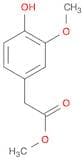
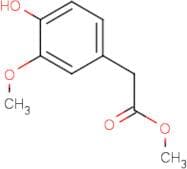
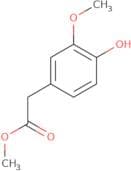
Methyl 4-hydroxy-3-methoxyphenylacetate, with the CAS number 15964-80-4, is an organic compound that belongs to the class of phenolic esters. It features a methoxy group and a hydroxy group on a phenyl ring, contributing to its potential biological activity. The compound is typically characterized by its aromatic structure, which enhances its stability and reactivity. It is often used in various applications, including as a flavoring agent, fragrance component, or in the synthesis of other chemical compounds. The presence of the ester functional group indicates that it can undergo hydrolysis, leading to the release of the corresponding acid and alcohol. Methyl 4-hydroxy-3-methoxyphenylacetate may exhibit antioxidant properties and has been studied for its potential therapeutic effects. Its solubility in organic solvents and moderate polarity make it suitable for various chemical reactions and formulations. As with many organic compounds, safety data should be consulted to understand its handling and potential hazards in laboratory or industrial settings.
Formula:C10H12O4
InChI:InChI=1/C10H12O4/c1-13-9-5-7(3-4-8(9)11)6-10(12)14-2/h3-5,11H,6H2,1-2H3
InChI key:InChIKey=JJJSFAGPWHEUBT-UHFFFAOYSA-N
SMILES:C(C(OC)=O)C1=CC(OC)=C(O)C=C1
Synonyms:- Benzeneacetic acid, 4-hydroxy-3-methoxy-, methyl ester
- Acetic acid, (4-hydroxy-3-methoxyphenyl)-, methyl ester
- Homovanillic acid methyl ester
- Methyl 3-methoxy-4-hydroxyphenylacetate
- Methyl homovanillate
- Methyl 4-hydroxy-3-methoxyphenylacetate
Sort by
Purity (%)
0
100
|
0
|
50
|
90
|
95
|
100
Found 4 products.
Benzeneacetic acid, 4-hydroxy-3-methoxy-, methyl ester
CAS:Formula:C10H12O4Purity:97%Color and Shape:SolidMolecular weight:196.1999Methyl 2-(4-hydroxy-3-methoxyphenyl)acetate
CAS:Purity:97%Color and Shape:SolidMolecular weight:196.2019958Methyl 4-hydroxy-3-methoxyphenylacetate
CAS:Methyl 4-hydroxy-3-methoxyphenylacetate (HMPAA) is a natural compound, which can be detected by mass spectrometric detection. It is an evaporative and has been shown to have inhibitory effects on the growth of ganglion cells in culture. HMPAA also inhibits phosphotungstic acid precipitation assays and crth2 expression. HMPAA has been shown to interact with other proteins, such as protein–protein interactions or functional groups. This compound is also involved in chemical reactions, such as the hydroxyl group or the methyl group. The detectable concentration of HMPAA ranges from 1 ng/mL to 1 μM and it is found in monomers or organic acids.Formula:C10H12O4Purity:Min. 95%Molecular weight:196.2 g/mol