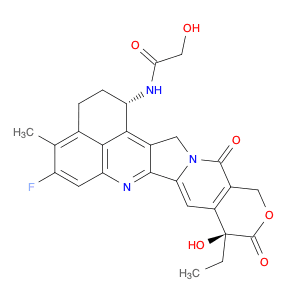
CAS 1599440-33-1
:DX-8951 derivative
Description:
DX-8951 derivative, identified by its CAS number 1599440-33-1, is a synthetic compound that belongs to a class of molecules known for their potential therapeutic applications, particularly in the field of oncology. This compound is characterized by its specific molecular structure, which includes various functional groups that contribute to its biological activity. Typically, derivatives like DX-8951 are designed to enhance efficacy, reduce toxicity, or improve pharmacokinetic properties compared to their parent compounds. The substance may exhibit properties such as selective inhibition of certain enzymes or pathways involved in cancer cell proliferation, making it a candidate for targeted therapy. Additionally, its solubility, stability, and interaction with biological systems are crucial for its development as a pharmaceutical agent. Research into DX-8951 derivative may involve in vitro and in vivo studies to assess its safety, effectiveness, and mechanism of action, contributing to the broader understanding of its potential role in cancer treatment.
Formula:C26H24FN3O6
Sort by
Purity (%)
0
100
|
0
|
50
|
90
|
95
|
100
Found 5 products.
Ref: IN-DA01EOPD
1gTo inquire5gTo inquire10gTo inquire25mg164.00€10mg171.00€50mg204.00€100mg243.00€250mg363.00€Dxd
CAS:Dxd (OQM5SD32BQ) is a potent DNA topoisomerase I inhibitor (IC50= 0.31 μM). Dxd was used as a conjugate drug for HER2-targeted ADCs. High-Quality, Low-Cost!Formula:C26H24FN3O6Purity:98.21% - ≥98%Color and Shape:SolidMolecular weight:493.48Dxd
CAS:Dxd is a type of Antibody-Drug Conjugate (ADC), which is a sophisticated therapeutic agent arising from bioconjugate chemistry. It incorporates a monoclonal antibody that specifically targets cancer cell antigens, linked to a cytotoxic payload designed to induce cell death. The mechanism of action involves the highly selective binding of the ADC to a cancer-specific antigen, followed by internalization, and subsequent release of the cytotoxic agent within the cell. This targeted approach allows for the preferential destruction of cancer cells while minimizing damage to healthy tissues.Formula:C26H24FN3O6Purity:Min. 95%Molecular weight:493.5 g/mol