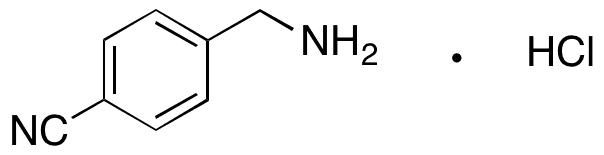
CAS 15996-76-6
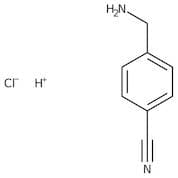
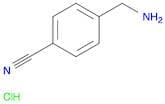
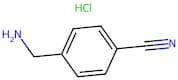
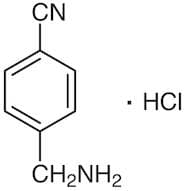
:4-(Aminomethyl)benzonitrile hydrochloride
- 4-Cnbam X Hcl
- 4-Cyanobenzylamine Hydrochloride
- 4-(Aminomethyl)Benzonitrile Hcl
- Alpha-Amino-P-Tolunitrile Hydrochloride
- 4-Cyanobenzylamine HCl
- 4-(Aminomethyl)-benzonitrile hydrochloride
4-(Aminomethyl)benzonitrile hydrochloride, 97%
CAS:This Thermo Scientific Chemicals brand product was originally part of the Alfa Aesar product portfolio. Some documentation and label information may refer to the legacy brand. The original Alfa Aesar product / item code or SKU reference has not changed as a part of the brand transition to Thermo SciFormula:C8H9ClN2Purity:97%Color and Shape:White to pale cream, Crystals or powder or crystalline powderMolecular weight:168.624-(Aminomethyl)benzonitrile, HCl
CAS:Formula:C8H9ClN2Purity:97%Color and Shape:SolidMolecular weight:168.62354-(Aminomethyl)benzonitrile hydrochloride
CAS:4-(Aminomethyl)benzonitrile hydrochlorideFormula:C8H8N2·ClHPurity:≥95%Color and Shape: white to off-white crystalline solidMolecular weight:168.62g/mol4-(Aminomethyl)benzonitrile Hydrochloride
CAS:Formula:C8H8N2·HClPurity:>98.0%(T)(HPLC)Color and Shape:White to Almost white powder to crystalMolecular weight:168.624-Cyanobenzylamine hydrochloride
CAS:Formula:C8H9ClN2Purity:98%Color and Shape:SolidMolecular weight:168.624-Cyanobenzylamine Hydrochloride
CAS:Controlled ProductApplications Intermediate in the preparation of Ximelagatran.
References Smits, R., et al.: J. Med. Chem., 51, 7855 (2008), Sander, K., et al.: Bioorg. Med. Chem., 17, 7186 (2009), Selness, S., et al.: Bioorg. Med. Chem. Lett., 19, 5851 (2009),Formula:C8H8ClN2Color and Shape:NeatMolecular weight:168.624-Cyanobenzylamine HCl
CAS:4-Cyanobenzylamine HCl is a degradable polymer that has been shown to inhibit colonic adenocarcinoma in mice. This compound was synthesized by the reaction of 4-cyanobenzylamine with 3-mercaptopropionic acid and was characterized using IR, 1H NMR, and 13C NMR spectroscopy. It also showed an inhibitory effect on the proliferation of human colon cancer cells. The polymer was found to gel when mixed with different concentrations of acrylamide and methylene bisacrylamide. Gelation occurred at a lower concentration of acrylamide than the amount used in previous studies. This may be due to its functional groups and morphology, which could have contributed to the inhibition of cell growth.
Formula:C8H8N2·HClPurity:Min. 95%Color and Shape:PowderMolecular weight:168.62 g/molRef: 3D-FC29527
Discontinued product