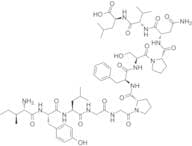
CAS 160369-86-8
:C-reactive protein fragment 174-185
Description:
C-reactive protein fragment 174-185 is a peptide derived from C-reactive protein (CRP), which is an acute-phase protein produced by the liver in response to inflammation. This specific fragment consists of amino acids 174 to 185 of the CRP molecule and is known for its role in modulating immune responses. It is characterized by its ability to bind to phosphocholine, which facilitates the opsonization of pathogens and enhances their clearance by immune cells. The fragment is often studied for its potential implications in inflammatory diseases and cardiovascular conditions, as CRP levels are commonly used as a biomarker for inflammation. The CAS number 160369-86-8 uniquely identifies this peptide in chemical databases, allowing for precise reference in research and clinical contexts. Its properties, such as solubility and stability, can vary depending on the formulation and conditions under which it is studied. Overall, this fragment serves as a valuable tool in understanding the biological functions of CRP and its role in the immune system.
Formula:C62H93N13O16
Synonyms:- C-Reactive Protein (CRP) (174-185)
- H-Ile-Tyr-Leu-Gly-Gly-Pro-Phe-Ser-Pro-Asn-Val-Leu-OH
- C-Reactive Protein (174-185)
Sort by
Purity (%)
0
100
|
0
|
50
|
90
|
95
|
100
Found 2 products.
C-Reactive Protein (CRP) (174-185)
CAS:CRP protein and its fragment (174-185, RS-83277) boost human monocyte and macrophage cancer-killing effects in vitro.Formula:C62H93N13O16Purity:98%Color and Shape:SolidMolecular weight:1276.48C-Reactive protein (crp) (174-185)
CAS:C-reactive Protein (CRP) is a protein that is made by the liver and other tissues in response to inflammation. CRP is an activator of the complement system and a ligand for the receptor C1q, which is involved in the inflammatory response. In addition, CRP binds to ion channels and has been shown to inhibit their opening. CRP also binds to antibody Fc receptors, which are found on macrophages and neutrophils. CRP can act as an inhibitor of protein interactions.
CRP has been used as a research tool to study cell biology, molecular biology, pharmacology, and life science. It is also used as an indicator of systemic inflammation or infection.Formula:C62H93N13O16Purity:Min. 95%Molecular weight:1,276.5 g/molRef: 3D-KGA36986
Discontinued product