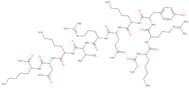
CAS 160489-86-1
:H-GLY-LYS-ARG-TYR-LYS-GLN-ARG-VAL-LYS-ASN-LYS-NH2
Description:
The chemical substance with the name "H-GLY-LYS-ARG-TYR-LYS-GLN-ARG-VAL-LYS-ASN-LYS-NH2" is a peptide composed of a sequence of amino acids, specifically glycine (Gly), lysine (Lys), arginine (Arg), tyrosine (Tyr), glutamine (Gln), valine (Val), and asparagine (Asn). This peptide is characterized by its basic nature due to the presence of multiple lysine and arginine residues, which contribute to its positive charge at physiological pH. The sequence suggests potential biological activity, possibly related to signaling or regulatory functions in biological systems. The presence of aromatic amino acids like tyrosine may also indicate potential interactions with other biomolecules. The CAS number 160489-86-1 uniquely identifies this specific peptide, facilitating its recognition in chemical databases and literature. Peptides like this one can be synthesized for research purposes and may have applications in drug development, particularly in targeting specific biological pathways or as therapeutic agents.
Formula:C61H110N24O14
Synonyms:- Pacap-38 (28-38) (Human, Chicken, Mouse, Ovine, Porcine, Rat)
- Pacap (28-38) (Human, Ovine, Rat)
- Pituitary Adenylate Cyclase Activating Polypeptide (28-38) (Human, Ovine, Rat)
- Pituitary Adenylate Cyclase Activating Polypeptide-38 (28-38) (Human, Chicken, Mouse, Ovine, Porcine, Rat)
- Gly-Lys-Arg-Tyr-Lys-Gln-Arg-Val-Lys-Asn-Lys-Nh2
Sort by
Purity (%)
0
100
|
0
|
50
|
90
|
95
|
100
Found 2 products.
PACAP-38 (28-38) (human, chicken, mouse, ovine, porcine, rat)
CAS:Bachem ID: 4039890.
Formula:C61H110N24O14Purity:> 98%Molecular weight:1403.7PACAP-38 (28-38) (human, chicken, mouse, ovine, porcine, rat) trifluoroacetate salt
CAS:PACAP-38 (28-38) is a peptide hormone that is produced in the brain and regulates various physiological processes. It has been shown to have effects on intestinal, pancreatic, and lung cells. PACAP-38 (28-38) is a potent antagonist of vasoactive intestinal polypeptide (VIP), which has been implicated in the regulation of gastrointestinal motility and fluid secretion. The peptide also inhibits cancer cell proliferation by activating cell death pathways.
Formula:C61H110N24O14Purity:Min. 95%Molecular weight:1,403.68 g/mol