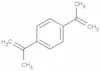
CAS 1605-18-1
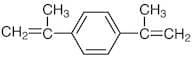
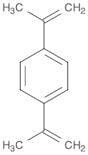
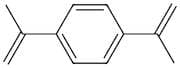
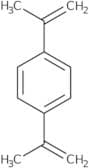
:1,4-Diisopropenylbenzene
Description:
1,4-Diisopropenylbenzene, with the CAS number 1605-18-1, is an organic compound characterized by its structure, which features a benzene ring substituted with two isopropenyl groups at the 1 and 4 positions. This compound is a colorless to pale yellow liquid at room temperature and is known for its strong aromatic odor. It is relatively reactive due to the presence of the isopropenyl groups, which can participate in various chemical reactions, including polymerization. 1,4-Diisopropenylbenzene is primarily used in the synthesis of polymers and as an intermediate in organic synthesis. Its reactivity makes it valuable in the production of specialty chemicals and materials. Additionally, it is important to handle this compound with care, as it may pose health risks upon exposure, including skin and respiratory irritation. Proper safety measures should be taken when working with this substance in laboratory or industrial settings.
Formula:C12H14
InChI:InChI=1S/C12H14/c1-9(2)11-5-7-12(8-6-11)10(3)4/h5-8H,1,3H2,2,4H3
InChI key:InChIKey=ZENYUPUKNXGVDY-UHFFFAOYSA-N
SMILES:C(C)(=C)C1=CC=C(C(C)=C)C=C1
Synonyms:- 1,4-Bis(1-methylethenyl)benzene
- 1,4-Bis(1-methylvinyl)benzene
- 1,4-Bis(prop-1-en-2-yl)benzene
- 1,4-Di(Prop-1-En-2-Yl)Benzene
- 1,4-Diisopropenylbenzene
- Benzene, 1,4-bis(1-methylethenyl)-
- Benzene, p-diisopropenyl-
- NSC 84197
- p-Diisopropenylbenzene
Sort by
Purity (%)
0
100
|
0
|
50
|
90
|
95
|
100
Found 5 products.
1,4-Diisopropenylbenzene
CAS:Formula:C12H14Purity:>98.0%(GC)Color and Shape:White to Almost white powder to crystalMolecular weight:158.24Benzene, 1,4-bis(1-methylethenyl)-
CAS:Formula:C12H14Purity:97%Color and Shape:SolidMolecular weight:158.23961,4-Diisopropenylbenzene
CAS:1,4-Diisopropenylbenzene is a hydrocarbon solvent that is used as a reagent in organic synthesis. It is reactive and can react with an inorganic acid such as hydrochloric acid to form an ester. The reaction time of 1,4-diisopropenylbenzene with an alkali metal hydroxide such as magnesium hydroxide is about one hour at room temperature. The product of this reaction is the magnesium salt of the corresponding carboxylic acid. 1,4-Diisopropenylbenzene has been shown to be toxic to mouse melanoma cells and has been used for cationic polymerization reactions. It has also been shown to be reactive with vinylene and other monomers, forming gels that are useful in making rubber products.
Formula:C12H14Purity:Min. 95%Color and Shape:PowderMolecular weight:158.24 g/mol1,4-Diisopropenylbenzene
CAS:Formula:C12H14Purity:97%Color and Shape:White to almost white powderMolecular weight:158.244