CAS 160599-70-2
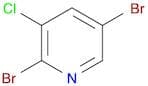
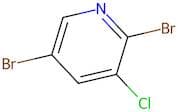
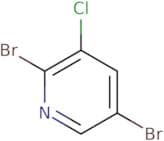
:2,5-dibromo-3-chloropyridine
Description:
2,5-Dibromo-3-chloropyridine is a heterocyclic organic compound characterized by the presence of a pyridine ring substituted with two bromine atoms and one chlorine atom. The molecular structure features a six-membered aromatic ring containing one nitrogen atom, which contributes to its basicity and potential reactivity. This compound typically appears as a solid at room temperature and is known for its moderate solubility in organic solvents, such as dichloromethane and ethanol, while being less soluble in water due to its halogen substitutions. The presence of multiple halogens enhances its reactivity, making it a useful intermediate in various chemical syntheses, particularly in the development of pharmaceuticals and agrochemicals. Additionally, 2,5-dibromo-3-chloropyridine may exhibit biological activity, which can be explored in medicinal chemistry. Safety precautions should be observed when handling this compound, as halogenated compounds can pose health risks and environmental concerns. Proper storage and disposal methods are essential to mitigate any potential hazards associated with its use.
Formula:C5H2Br2ClN
InChI:InChI=1/C5H2Br2ClN/c6-3-1-4(8)5(7)9-2-3/h1-2H
SMILES:c1c(cnc(c1Cl)Br)Br
Synonyms:- Pyridine, 2,5-dibromo-3-chloro-
Sort by
Purity (%)
0
100
|
0
|
50
|
90
|
95
|
100
Found 4 products.
Pyridine, 2,5-dibromo-3-chloro-
CAS:Formula:C5H2Br2ClNPurity:98%Color and Shape:SolidMolecular weight:271.33713-Chloro-2,5-dibromopyridine
CAS:3-Chloro-2,5-dibromopyridineFormula:C5H2Br2ClNPurity:≥95%Color and Shape: off-white powderMolecular weight:271.34g/mol2,5-Dibromo-3-chloropyridine
CAS:Formula:C5H2Br2ClNPurity:97%Color and Shape:SolidMolecular weight:271.343-Chloro-2,5-dibromopyridine
CAS:3-Chloro-2,5-dibromopyridine is a fine chemical that is used as a building block in the synthesis of other chemicals. It is a reagent and speciality chemical with high quality and complex structure. 3-Chloro-2,5-dibromopyridine is a versatile building block that can be used in the synthesis of many different compounds and as an intermediate or scaffold for other reactions. It has been shown to react with various nucleophiles, such as amines, alcohols, and thiols.Formula:C5H2Br2CINPurity:Min. 95%Color and Shape:White/Off-White SolidMolecular weight:271.34 g/mol