CAS 1606-30-0
:2-methyl-1-nitroprop-1-ene
Description:
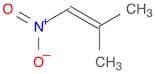
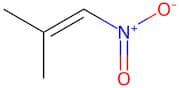
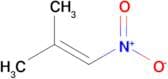
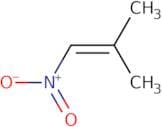
2-Methyl-1-nitroprop-1-ene, with the CAS number 1606-30-0, is an organic compound characterized by its structure, which includes a nitro group (-NO2) attached to a propene backbone. This compound features a double bond between the first and second carbon atoms, contributing to its reactivity and potential applications in organic synthesis. The presence of the methyl group at the second carbon enhances its stability and influences its chemical behavior. Typically, nitroalkenes like 2-methyl-1-nitroprop-1-ene are known for their electrophilic properties, making them useful intermediates in various chemical reactions, including nucleophilic additions and cycloadditions. The compound is likely to be a colorless to pale yellow liquid, exhibiting moderate volatility and solubility in organic solvents. Safety considerations should be taken into account, as nitro compounds can be hazardous and may require careful handling and storage. Overall, 2-methyl-1-nitroprop-1-ene is a valuable compound in synthetic organic chemistry, with potential applications in the development of pharmaceuticals and agrochemicals.
Formula:C4H7NO2
InChI:InChI=1/C4H7NO2/c1-4(2)3-5(6)7/h3H,1-2H3
SMILES:CC(=CN(=O)=O)C
Synonyms:- 1-Propene, 2-methyl-1-nitro-
- 2-Methyl-1-nitro-1-propene
Sort by
Purity (%)
0
100
|
0
|
50
|
90
|
95
|
100
Found 4 products.
2-Methyl-1-nitroprop-1-ene
CAS:2-Methyl-1-nitroprop-1-eneFormula:C4H7NO2Purity:≥95%Color and Shape:SolidMolecular weight:101.10g/mol2-Methyl-1-nitroprop-1-ene
CAS:2-Methyl-1-nitroprop-1-ene is a labile molecule that can be readily synthesized from 2-methyl propanal and nitrous acid. The postulated reaction mechanism for the formation of 2-methyl-1-nitroprop-1-ene begins with the nucleophilic attack of the azide anion on the carbonyl group of 2 methyl propanal, forming a tetrahedral intermediate. This intermediate undergoes a stepwise reaction to form 2 methyl 1 nitropropane. Nitro groups have been observed in both the product and starting material, which could indicate a transfer mechanism.Formula:C4H7NO2Purity:Min. 95%Color and Shape:Clear LiquidMolecular weight:101.1 g/mol