CAS 1620-30-0
:α,α-Diphenyl-4-pyridinemethanol
Description:
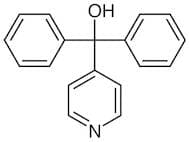
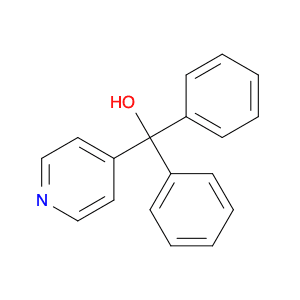
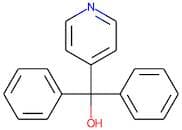
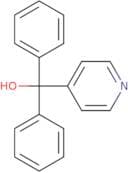
α,α-Diphenyl-4-pyridinemethanol, with the CAS number 1620-30-0, is an organic compound characterized by its structure, which includes a pyridine ring and two phenyl groups attached to a central carbon bearing a hydroxyl (-OH) group. This compound typically appears as a solid at room temperature and is known for its potential applications in organic synthesis and as a reagent in various chemical reactions. It exhibits moderate solubility in organic solvents, reflecting its hydrophobic phenyl groups, while the hydroxyl group contributes to its polar characteristics. The presence of the pyridine ring imparts basic properties, allowing it to participate in various chemical reactions, including nucleophilic substitutions and hydrogen bonding interactions. Additionally, α,α-Diphenyl-4-pyridinemethanol may exhibit interesting biological activities, making it a subject of interest in medicinal chemistry. Safety data should be consulted for handling and storage, as with any chemical substance, to ensure proper laboratory practices.
Formula:C18H15NO
InChI:InChI=1S/C18H15NO/c20-18(15-7-3-1-4-8-15,16-9-5-2-6-10-16)17-11-13-19-14-12-17/h1-14,20H
InChI key:InChIKey=MRHLFZXYRABVOZ-UHFFFAOYSA-N
SMILES:C(O)(C1=CC=CC=C1)(C2=CC=CC=C2)C=3C=CN=CC3
Synonyms:- (4-Pyridyl)benzhydrol
- 4-Pyridinemethanol, α,α-diphenyl-
- 4-Pyridyldiphenylcarbinol
- Diphenyl(Pyridin-4-Yl)Methanol
- Diphenyl-4-pyridylmethanol
- NSC 241092
- NSC 525212
- α,α-Diphenyl-4-pyridinemethanol
- α-(4-Pyridyl)benzhydrol
- α-Pyridylbenzhydrol
Sort by
Purity (%)
0
100
|
0
|
50
|
90
|
95
|
100
Found 4 products.
α,α-Diphenyl-4-pyridylmethanol
CAS:Formula:C18H15NOPurity:>98.0%(GC)(T)Color and Shape:White to Light yellow to Light red powder to crystalMolecular weight:261.324-Pyridinemethanol, α,α-diphenyl-
CAS:Formula:C18H15NOPurity:98%Color and Shape:SolidMolecular weight:261.3178±,±-Diphenyl-4-pyridylmethanol
CAS:Controlled Product4-Cyanopyridine is a nucleophilic compound that forms a complex molecule with chloride. It has potent antiproliferative activity and structural analysis metrics have shown its potential to be an anticancer drug. 4-Cyanopyridine selectively targets cancer cells that overexpress the surface protein CD44, which facilitates cellular adhesion and migration, by binding to the cysteine residues on CD44. This leads to cell cycle arrest, apoptosis, or necrosis depending on the cell type. 4-Cyanopyridine also inhibits the growth of human carcinoma cell lines at low doses when used in combination with other drugs such as tamoxifen.Formula:C18H15NOPurity:Min. 95%Molecular weight:261.32 g/mol