![Benzeneethanol, a-methyl-b-[[4-[2-(methylamino)ethoxy]phenyl]phenylmethylene]-,(bE)-](/_next/image/?url=https%3A%2Fstatic.cymitquimica.com%2Fcas-image%2Fthumb-webp%2F375313-benzeneethanol-a-methyl-b-4-2-methylamino-ethoxy-phenyl-phenylmethylene-be.webp&w=3840&q=75)
CAS 162070-61-3
:Benzeneethanol, a-methyl-b-[[4-[2-(methylamino)ethoxy]phenyl]phenylmethylene]-,(bE)-
Description:
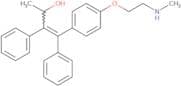
Benzeneethanol, a-methyl-b-[[4-[2-(methylamino)ethoxy]phenyl]phenylmethylene]-, (bE)-, with CAS number 162070-61-3, is a chemical compound characterized by its complex structure, which includes a benzene ring, an alcohol functional group, and an ether linkage. This compound features a methylamino group, indicating the presence of a nitrogen atom bonded to a methyl group, which can influence its reactivity and solubility. The presence of multiple aromatic rings suggests potential for π-π stacking interactions, which may affect its physical properties such as melting and boiling points. Additionally, the ether and alcohol functionalities can contribute to hydrogen bonding capabilities, impacting solubility in polar and non-polar solvents. The compound's structure may also suggest potential applications in pharmaceuticals or materials science, particularly in the development of drug formulations or as a building block in organic synthesis. However, specific biological activity, toxicity, and environmental impact would require further investigation through empirical studies.
Formula:C25H27NO2
Synonyms:- Benzeneethanol,a-methyl-b-[[4-[2-(methylamino)ethoxy]phenyl]phenylmethylene]-,(E)-
Sort by
Purity (%)
0
100
|
0
|
50
|
90
|
95
|
100
Found 3 products.
N-Desmethyl (E)-alpha-Hydroxy Tamoxifen
CAS:Controlled ProductStability Light Sensitive
Applications N-Desmethyl (E)-α-Hydroxy Tamoxifen is a N-demethylated, α-Hydroxyated metabolite of Tamoxifen (T006000).
References Poon, G.K. et al.: Drug Metab.Dispos. 23,377 (1995); Teunissen, S.F. et al.: J. Pharmac. Biomed. Anal., 55, 518 (2011); Muerdter, T.E. et al.: Clin. Pharmacol. Therap., 89, 708 (2011);Formula:C25H27NO2Color and Shape:NeatMolecular weight:373.49N-Desmethyl (E)-α-hydroxy tamoxifen
CAS:N-Desmethyl (E)-α-hydroxy tamoxifen is a metabolite of tamoxifen. This drug has been shown to be more reactive than its parent compound, with the potential for enhanced toxicity. N-Desmethyl (E)-α-hydroxy tamoxifen is thought to be responsible for the toxic effects of tamoxifen in women and rats. The metabolites are excreted in the bile, with 50% being reabsorbed from the gastrointestinal tract and then excreted into the urine. In human liver cells, N-desmethyl (E)-α-hydroxy tamoxifen inhibits the growth of cancer cells and induces apoptosis by binding to DNA. It also causes increased production of reactive oxygen species in liver cells, which may contribute to hepatotoxicity.Formula:C25H27NO2Purity:Min. 95%Molecular weight:373.5 g/mol