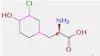
CAS 162599-96-4
:H-D-Tyr(3-Cl)-OH
Description:
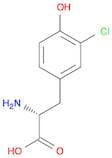
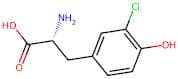
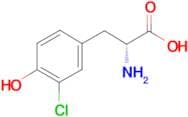
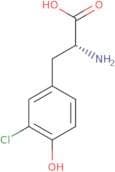
H-D-Tyr(3-Cl)-OH, also known as 3-chloro-tyrosine, is a derivative of the amino acid tyrosine, characterized by the presence of a chlorine atom at the meta position of the phenolic ring. This modification can influence the compound's biochemical properties, such as its reactivity and interaction with enzymes or receptors. The presence of the hydroxyl group (-OH) contributes to its polar nature, enhancing its solubility in aqueous environments. H-D-Tyr(3-Cl)-OH is often utilized in biochemical research, particularly in studies involving protein synthesis, enzyme activity, and the investigation of tyrosine's role in neurotransmitter production. Its structural similarity to natural tyrosine allows it to participate in various biological processes, while the chlorine substitution may impart unique properties, such as altered binding affinities or stability. As with many amino acid derivatives, it is essential to handle this compound with care, considering its potential biological activity and the implications of its chlorine substitution in experimental contexts.
Formula:C9H10ClNO3
InChI:InChI=1S/C9H10ClNO3/c10-6-3-5(1-2-8(6)12)4-7(11)9(13)14/h1-3,7,12H,4,11H2,(H,13,14)/t7-/m0/s1
SMILES:c1cc(c(cc1C[C@@H](C(=O)O)N)Cl)O
Synonyms:- 3-Chloro-D-tyrosine
- m-Chloro-D-Tyr-OH
- D-Tyrosine, 3-chloro-
Sort by
Purity (%)
0
100
|
0
|
50
|
90
|
95
|
100
Found 4 products.
Fmoc-D-Aph(D-Hor)-OH
CAS:<p>Fmoc-D-Aph(D-Hor)-OH is a prodrug that is metabolized to the active form, 3-chloro-l-tyrosine. It has been shown to interact with optical and natural products, such as oxone, to form novel compounds. Fmoc-D-Aph(D-Hor)-OH can be used as an antimitotic agent in cancer research. It has high cytotoxicity against a number of cell lines, including resistant cell lines. Fmoc-D-Aph(D-Hor)-OH inhibits microtubule formation by binding to tubulin monomers and preventing their polymerization into microtubules. This leads to accumulation of cells in the G2 phase of the cell cycle and ultimately apoptosis. Fmoc-D-Aph(D-Hor)-OH also inhibits fungal growth through interaction with ergosterol, which disrupts membrane integrity and causes leakage of intracellular contents</p>Formula:C29H26N4O7Purity:Min. 95%Color and Shape:PowderMolecular weight:542.54 g/mol