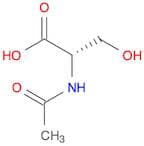
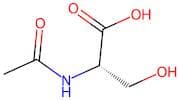
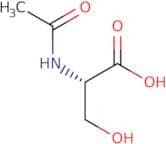
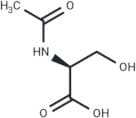
CAS 16354-58-8
:Acetylserine
- (2S)-2-Acetamido-3-hydroxypropanoic acid
- (2S)-2-acetamido-3-hydroxy-propanoic acid
- (S)-2-Acetamido-3-hydroxypropanoic acid
- <span class="text-smallcaps">L</span>-Serine, N-acetyl-
- Acetylserine
- N-Acetyl-<span class="text-smallcaps">L</span>-serine
- N-Acetylserine
- Serine, N-acetyl-, <span class="text-smallcaps">L</span>-
- N-Acetyl-L-serine
- Serine, N-acetyl-, L-
- L-Serine, N-acetyl-
(2S)-2-acetamido-3-hydroxypropanoic acid
CAS:Formula:C5H9NO4Purity:97%Color and Shape:SolidMolecular weight:147.1293(S)-2-Acetamido-3-Hydroxypropanoic Acid
CAS:(S)-2-Acetamido-3-Hydroxypropanoic AcidPurity:97%Molecular weight:147.13g/molN-Acetyl-L-serine
CAS:N-Acetyl-L-serine is a naturally occurring amino acid that plays an important role in the synthesis of proteins. It has been shown to have regulatory effects on messenger RNA (mRNA) translation. N-Acetyl-L-serine also plays a role in the production of enzymes, such as catalase and phosphoglycerate kinase, which are necessary for cell growth. This compound has been used to increase the yield of various types of bacteria, such as Corynebacterium glutamicum and Klebsiella aerogenes. It has also been found to be effective at inhibiting cancer cells by acting as a substrate for dna synthesis and preventing the formation of mRNA templates. N-Acetyl-L-serine is also useful for analytical methods that require DNA templates, such as restriction enzyme analysis.
Formula:C5H9NO4Purity:(¹H-Nmr) Min. 95 Area-%Color and Shape:PowderMolecular weight:147.13 g/mol(S)-2-Acetamido-3-hydroxypropanoic acid
CAS:Formula:C5H9NO4Purity:97%Color and Shape:SolidMolecular weight:147.13N-Acetylserine
CAS:N-Acetylserine (N-Acetyl-L-serine) serves as the physiological inducer of cysteine biosynthesis by binding to the CysB apoprotein and stimulating cysJIHFormula:C5H9NO4Purity:99.28%Color and Shape:SolidMolecular weight:147.13