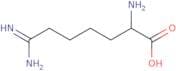
CAS 16377-00-7
:Indospicine
Description:
Indospicine is a naturally occurring alkaloid primarily derived from the plant species *Indigofera* and is known for its toxic properties. It is characterized by its structure, which includes a pyrrolidine ring and a carboxylic acid functional group. Indospicine exhibits significant biological activity, particularly as an inhibitor of protein synthesis, which can lead to detrimental effects on animal health, especially in livestock that consume plants containing this compound. Its toxicity is attributed to its ability to interfere with amino acid metabolism, particularly affecting the liver and leading to conditions such as hepatic necrosis. Indospicine has garnered interest in toxicology and pharmacology due to its potential implications in both environmental and agricultural contexts. Additionally, its presence in certain plants raises concerns regarding livestock poisoning and the safety of animal-derived food products. As research continues, understanding the mechanisms of its toxicity and potential therapeutic applications remains a focus within the scientific community.
Formula:C7H15N3O2
InChI:InChI=1S/C7H15N3O2/c8-5(7(11)12)3-1-2-4-6(9)10/h5H,1-4,8H2,(H3,9,10)(H,11,12)/t5-/m0/s1
InChI key:InChIKey=SILQDLDAWPQMEL-YFKPBYRVSA-N
SMILES:C(CCCC(=N)N)[C@@H](C(O)=O)N
Synonyms:- Indospicine
- Heptanoic acid, 2,7-diamino-7-imino-, (2S)-
- (2S)-2,7-Diamino-7-iminoheptanoic acid
- (2S,7Z)-2,7-diamino-7-iminoheptanoic acid
- Norleucine, 6-amidino-, L-
- Heptanoic acid, 2,7-diamino-7-imino-, (S)-
- Heptanoic acid, 2,7-diamino-7-imino-, (S)-
- 6-Amidino-2-aminohexanoic acid
Sort by
Purity (%)
0
100
|
0
|
50
|
90
|
95
|
100
Found 2 products.
Indospicine
CAS:Indospicine is a non-proteinogenic amino acid, which is a bioactive compound derived from certain plants, particularly members of the genus *Indigofera*. This compound's mode of action is rooted in its ability to interfere with normal protein synthesis and metabolism within hepatocytes, leading to hepatotoxic effects. Indospicine functions by incorporating itself into proteins in place of arginine, subsequently causing cellular dysfunction and liver damage through mechanisms that are still being elucidated.Uses and applications of indospicine primarily concern its implications in veterinary science and toxicological studies. In livestock that consume *Indigofera*-contaminated feed, indospicine accumulation can result in significant hepatic pathology, affecting meat quality and animal health. Understanding its mechanistic pathways is crucial for developing strategies to mitigate its effects. Research into indospicine is vital for assessing the risk to animals, particularly in regions where *Indigofera* species proliferate, and for formulating guidelines to ensure safe agricultural practices. Such studies also help illuminate broader biochemical pathways involving amino acid substitution and protein synthesis disruption.Formula:C7H15N3O2Purity:Min. 95%Color and Shape:PowderMolecular weight:173.21 g/mol