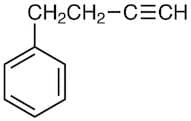
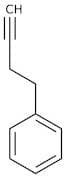
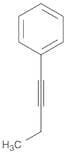
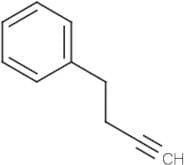
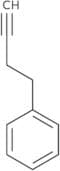
CAS 16520-62-0
:Phenylbutyne
Description:
Phenylbutyne, with the CAS number 16520-62-0, is an organic compound that belongs to the alkyne family, characterized by the presence of a triple bond between carbon atoms. It features a phenyl group (a benzene ring) attached to a butyne chain, which contributes to its unique properties. This compound typically exhibits a colorless to pale yellow liquid form and has a distinct aromatic odor. Phenylbutyne is known for its relatively high boiling point compared to other hydrocarbons due to the presence of the triple bond and the aromatic ring, which also influences its reactivity. It is generally insoluble in water but soluble in organic solvents, making it useful in various chemical applications. The compound can participate in reactions typical of alkynes, such as addition reactions, and is often utilized in organic synthesis and as an intermediate in the production of more complex molecules. Safety precautions should be taken when handling phenylbutyne, as it may pose health risks if inhaled or absorbed through the skin.
Formula:C10H10
InChI:InChI=1/C10H10/c1-2-3-7-10-8-5-4-6-9-10/h1,4-6,8-9H,3,7H2
SMILES:C#CCCc1ccccc1
Synonyms:- 4-Phenyl-1-butyne
- But-3-Yn-1-Ylbenzene
Sort by
Purity (%)
0
100
|
0
|
50
|
90
|
95
|
100
Found 6 products.
4-Phenyl-1-butyne
CAS:Formula:C10H10Purity:>97.0%(GC)Color and Shape:Colorless to Light orange to Yellow clear liquidMolecular weight:130.194-Phenyl-1-butyne, 98%
CAS:4-Phenyl-1-butyne is used as an intermediate in chemical research. This Thermo Scientific Chemicals brand product was originally part of the Alfa Aesar product portfolio. Some documentation and label information may refer to the legacy brand. The original Alfa Aesar product / item code or SKU refereFormula:C10H10Purity:98%Color and Shape:Clear colorless to yellow, LiquidMolecular weight:130.194-Phenyl-1-butyne
CAS:4-Phenyl-1-butyne is an organic molecule that can be synthesized in a number of ways, including using an asymmetric synthesis. It is one of the two structural isomers of terminal alkynes and has been shown to inhibit the enzyme carboxylesterase. 4-Phenyl-1-butyne has also been shown to have a control experiment, which may help to identify the chemical mechanism of reaction. The optimal reaction time for this molecule is between 1 and 2 hours at a temperature of 100 degrees Celsius. 4-Phenyl-1-butyne reacts with acid molecules such as hydrochloric acid or sulfuric acid to form monocarboxylic acids. This molecular structure also reacts with water to produce hydrogen gas and carbon dioxide.
Formula:C10H10Purity:Min. 95%Molecular weight:130.19 g/mol