CAS 165803-89-4
:3-IODO-4-METHYLBENZYL ALCOHOL 97
Description:
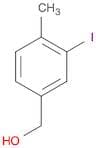
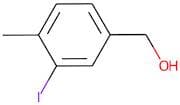
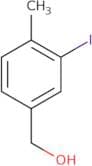
3-Iodo-4-methylbenzyl alcohol, with the CAS number 165803-89-4, is an organic compound characterized by the presence of an iodine atom and a hydroxyl group (-OH) attached to a benzyl structure. This compound features a methyl group at the para position relative to the hydroxyl group on the benzene ring, which influences its reactivity and solubility. Typically, compounds like this exhibit moderate polarity due to the hydroxyl group, allowing for hydrogen bonding, which can affect their solubility in polar solvents. The iodine substituent can enhance the compound's reactivity in nucleophilic substitution reactions, making it useful in various synthetic applications. Additionally, the presence of the aromatic ring contributes to its stability and potential for undergoing electrophilic aromatic substitution. As with many halogenated compounds, safety precautions should be taken due to potential toxicity and environmental impact. Overall, 3-iodo-4-methylbenzyl alcohol is of interest in organic synthesis and medicinal chemistry for its unique structural features and reactivity.
Formula:C8H9IO
InChI:InChI=1/C8H9IO/c1-6-2-3-7(5-10)4-8(6)9/h2-4,10H,5H2,1H3
SMILES:Cc1ccc(cc1I)CO
Synonyms:- (3-Iodo-4-Methylphenyl)Methanol
Sort by
Purity (%)
0
100
|
0
|
50
|
90
|
95
|
100
Found 4 products.
Benzenemethanol, 3-iodo-4-methyl-
CAS:Formula:C8H9IOPurity:95%Color and Shape:SolidMolecular weight:248.06093-Iodo-4-methylbenzyl alcohol
CAS:3-Iodo-4-methylbenzyl alcoholFormula:C8H9IOPurity:≥95%Color and Shape: yellow solidMolecular weight:248.06g/mol3-Iodo-4-methylbenzyl alcohol
CAS:3-Iodo-4-methylbenzyl alcohol is a cell line that is used in the study of protein kinase. It has been shown to inhibit the uptake of unlabeled 3H-labeled L-[3,4-3H]aspartate by a family of human cells, which are called SKN-SH cells. The uptake of radioiodinated L-[3,4,5,6]aspartate was also inhibited by this compound. These findings suggest that 3-Iodo-4-methylbenzyl alcohol is an inhibitor of protein kinase and may be useful as a diagnostic tool for identifying protein kinase inhibitors.Formula:C8H9IOPurity:Min. 95%Molecular weight:248.06 g/mol