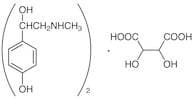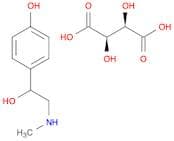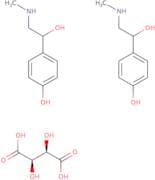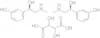
CAS 16589-24-5
:Synephrine tartrate
- 2,3-Dihydroxybutanedioic Acid,4-[1-Hydroxy-2-(Methylamino)Ethyl]Phenol
- 4-[1-Hydroxy-2-(Methylamino)Ethyl]Phenol
- 4-[1-Hydroxy-2-(Methylamino)Ethyl]Phenol 2,3-Dihydroxybutanedioate (1:1)
- 4-[1-Hydroxy-2-(Methylamino)Ethyl]Phenol 2,3-Dihydroxybutanedioate (2:1)
- <span class="text-smallcaps">DL</span>-p-Synephrine
- Benzenemethanol, 4-hydroxy-alpha-((methylamino)methyl)-, (2R,3R)-2,3-dihydroxybutanedioate (2:1) (salt)
- Benzenemethanol, 4-hydroxy-alpha-((methylamino)methyl)-, (R-(R*,R*))-2,3-dihydroxybutanedioate (2:1) (salt)
- Benzenemethanol, 4-hydroxy-α-[(methylamino)methyl]-, (2R,3R)-2,3-dihydroxybutanedioate (2:1)
- Benzenemethanol, 4-hydroxy-α-[(methylamino)methyl]-, (2R,3R)-2,3-dihydroxybutanedioate (2:1) (salt)
- Benzenemethanol, 4-hydroxy-α-[(methylamino)methyl]-, [R-(R*,R*)]-2,3-dihydroxybutanedioate (2:1) (salt)
- Benzyl alcohol, p-hydroxy-alpha-((methylamino)methyl)-, tartrate (2:1) (salt)
- Benzyl alcohol, p-hydroxy-α-[(methylamino)methyl]-, tartrate (2:1) (salt)
- Bis((beta,4-dihydroxyphenethyl)methylammonium) (R-(R*,R*))-tartrate
- Corvasymton
- Oxedrine tartrate
- Simpadren
- Sympathomim
- Synephrine L-tartrate
- bis[()-(β-,4-dihydroxyphenethyl)methylammonium] [R-(R*,R*)]-tartrate
- See more synonyms
Synephrine Tartrate
CAS:Formula:C18H26N2O4·C4H6O6Purity:>98.0%(T)(HPLC)Color and Shape:White to Almost white powder to crystalMolecular weight:484.50Synephrine hemitartrate
CAS:Formula:C22H32N2O10Purity:98%Color and Shape:SolidMolecular weight:484.4969Synephrine hemitartrate
CAS:Synephrine hemitartrate, an alkaloid from Citrus aurantium, is a sympathomimetic for weight loss, with α and β-adrenergic action.Formula:C9H13NO2C4H6O6Color and Shape:SolidMolecular weight:242.26(+/-)-Synephrine tartrate
CAS:Synephrine is a drug that is used as an appetite suppressant and weight-loss aid. It can be found in dietary supplements, where it is marketed as a stimulant. Synephrine has been shown to have an inhibitory effect on the carotid sinus reflexes, which are nerve impulses that regulate blood pressure. This drug also has a pressor effect on the heart and causes an increase in systolic and diastolic blood pressures. The enantiomers of synephrine are (+)synephrine or (-)-synephrine tartrate, which differ only in the stereochemistry of their chiral centers. The hydrochloric acid present in synephrine tartrate breaks down into amines such as histamine and serotonin, which cause swelling of smooth muscles found in the walls of blood vessels. When taken orally, this drug is metabolized by hydrolysis to picric acid or (+)-synephrine or (-)-synephrine tartrate,
Formula:(C9H13NO2)2•C4H6O6Purity:Min. 95%Color and Shape:PowderMolecular weight:484.5 g/mol