CAS 1660-19-1
:(4-FORMYL-2-METHOXYPHENOXY)ACETIC ACID
Description:
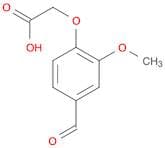
(4-Formyl-2-methoxyphenoxy)acetic acid, with the CAS number 1660-19-1, is an organic compound characterized by its functional groups, which include an aldehyde (formyl) and a carboxylic acid (acetic acid) linked to a methoxy-substituted phenyl ring. This compound typically appears as a solid or crystalline substance and is soluble in polar solvents due to the presence of the carboxylic acid group. Its structure suggests potential applications in pharmaceuticals and agrochemicals, particularly as an intermediate in the synthesis of more complex molecules. The presence of the methoxy group can influence its reactivity and solubility, while the aldehyde functionality may participate in various chemical reactions, such as condensation or oxidation. Additionally, the compound may exhibit biological activity, making it of interest for further research in medicinal chemistry. Safety data should be consulted for handling and storage, as with any chemical substance, to ensure proper precautions are taken.
Formula:C10H9O5
InChI:InChI=1/C10H10O5/c1-14-9-4-7(5-11)2-3-8(9)15-6-10(12)13/h2-5H,6H2,1H3,(H,12,13)/p-1
SMILES:COc1cc(ccc1OCC(=O)[O-])C=O
Synonyms:- Acetic acid, 2-(4-formyl-2-methoxyphenoxy)-
- (4-Formyl-2-Methoxyphenoxy)Acetate
- (4-Formyl-2-methoxyphenoxy)acetic acid
Sort by
Purity (%)
0
100
|
0
|
50
|
90
|
95
|
100
Found 4 products.
Acetic acid,2-(4-formyl-2-methoxyphenoxy)-
CAS:Formula:C10H10O5Purity:98%Color and Shape:SolidMolecular weight:210.1834(4-Formyl-2-methoxyphenoxy)acetic acid
CAS:(4-Formyl-2-methoxyphenoxy)acetic acidPurity:98%Molecular weight:210.1834g/mol(4-Formyl-2-methoxyphenoxy)acetic acid
CAS:Phenoxyacetic acid is a phenoxy compound that exhibits antibacterial and anthelmintic activity. It has been shown to be highly active against helminthes, such as tapeworms and roundworms. Phenoxyacetic acid interacts with the helminth's cell membrane, which causes the release of cytochrome c from mitochondria and inhibits mitochondrial function. This leads to cell death by inhibiting protein synthesis and DNA replication. The hydrophobic nature of phenoxyacetic acid allows it to penetrate the anthelmint's cuticle and enter the worm's body cavity where it inhibits mitochondrial function. Phenoxyacetic acid has also been shown to inhibit tuberculosis in mice in vivo, but not in vitro. In addition, phenoxyacetic acid binds to nuclei of cancer cells and prevents the production of RNA and protein synthesis. This results in cell death by apoptosis or necrosis.Formula:C10H10O5Purity:Min. 95%Color and Shape:PowderMolecular weight:210.18 g/mol