CAS 16665-38-6
:(4-METHOXY-PYRIDIN-2-YL)-METHANOL
Description:
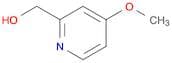
(4-Methoxy-pyridin-2-yl)-methanol, with the CAS number 16665-38-6, is an organic compound characterized by its pyridine ring structure substituted with a methoxy group and a hydroxymethyl group. This compound typically exhibits properties associated with both aromatic and aliphatic compounds, including moderate polarity due to the presence of the methoxy and hydroxymethyl functional groups. It is likely to be a colorless to pale yellow liquid or solid, depending on its state at room temperature. The methoxy group contributes to its solubility in organic solvents, while the hydroxymethyl group can enhance hydrogen bonding capabilities, affecting its reactivity and interactions with other molecules. This compound may be of interest in various fields, including medicinal chemistry and organic synthesis, due to its potential biological activity and utility as an intermediate in the synthesis of more complex molecules. Safety data should be consulted for handling and storage, as with any chemical substance.
Formula:C7H9NO2
Synonyms:- Chempacific 38146
Sort by
Purity (%)
0
100
|
0
|
50
|
90
|
95
|
100
Found 4 products.
2-Pyridinemethanol, 4-methoxy-
CAS:Formula:C7H9NO2Purity:97%Color and Shape:SolidMolecular weight:139.1519(4-Methoxy-pyridin-2-yl)-methanol
CAS:(4-Methoxy-pyridin-2-yl)-methanolPurity:98%Molecular weight:139.15g/mol4-METHOXY-2-HYDROXYMETHYLPYRIDINE
CAS:Formula:C7H9NO2Purity:97%Color and Shape:SolidMolecular weight:139.154(4-Methoxy-pyridin-2-yl)-methanol
CAS:(4-Methoxy-pyridin-2-yl)-methanol is a nucleophile that can be used in the preparation of phosphorothioates and triphosphates. It is also used to synthesize oligonucleotides, which are biomolecules used to probe the structure of DNA. This compound has been shown to have high yields and is exothermic, making it a good candidate for catalysis. The chemical properties of (4-Methoxy-pyridin-2-yl)-methanol make it an excellent nucleophile with a strong affinity for phosphorous, which makes it useful in the synthesis of phosphorothioates and triphosphates.
Formula:C7H9NO2Purity:Min. 95%Molecular weight:139.16 g/mol