CAS 1679-18-1
:(4-Chlorophenyl)boronic acid
Description:
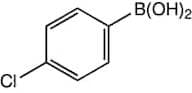
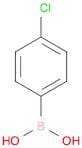
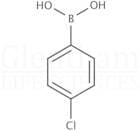
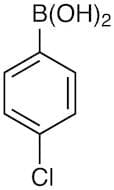
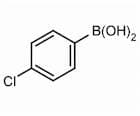
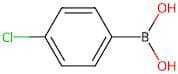
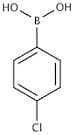
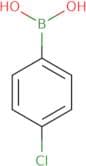
(4-Chlorophenyl)boronic acid, with the CAS number 1679-18-1, is an organoboron compound characterized by the presence of a boronic acid functional group attached to a chlorinated phenyl ring. This compound typically appears as a white to off-white solid and is soluble in polar organic solvents such as methanol and ethanol. Its structure features a boron atom bonded to a hydroxyl group and a phenyl ring that has a chlorine substituent at the para position. (4-Chlorophenyl)boronic acid is known for its utility in organic synthesis, particularly in cross-coupling reactions, such as Suzuki-Miyaura coupling, which allows for the formation of carbon-carbon bonds. Additionally, it can serve as a ligand in coordination chemistry and has applications in the development of sensors and pharmaceuticals. The compound is also notable for its ability to form reversible complexes with diols, making it useful in various biochemical applications. Safety precautions should be taken when handling this substance, as it may pose health risks if ingested or inhaled.
Formula:C6H6BClO2
InChI:InChI=1S/C6H6BClO2/c8-6-3-1-5(2-4-6)7(9)10/h1-4,9-10H
InChI key:InChIKey=CAYQIZIAYYNFCS-UHFFFAOYSA-N
SMILES:B(O)(O)C1=CC=C(Cl)C=C1
Synonyms:- (4-Chlorophenyl)boronic acid
- (P-Chlorophenyl)Metaboric Acid
- (p-Chlorophenyl)boronic acid
- (p-Chlorphenyl)metaborsaure
- 4-Chlorobenzeneboronic Acid
- 4-Chlorophenylbornic Acid
- 4-Chlorophenylboroic Acid
- Acide (P-Chlorophenyl)Metaborique
- Acido (P-Clorofenil)Metaborico
- Akos Brn-0011
- B-(4-Chlorophenyl)boronic acid
- Benzeneboronic acid, p-chloro-
- Boronic Acid, (4-Chlorophenyl)-
- Boronic acid, B-(4-chlorophenyl)-
- Nsc 25408
- P-Chloro Benzene Boronic Acid
- P-Chlorophenylboronic Acid
- Rarechem Ah Pb 0178
- See more synonyms
Sort by
Purity (%)
0
100
|
0
|
50
|
90
|
95
|
100
Found 11 products.
4-Chlorobenzeneboronic acid, 98+%
CAS:Used as a GC reagent for diols. It is a reagent used for palladium-catalyzed direct arylation, cyclopalladation, tandem-type Pd(II)-catalyzed oxidative Heck reaction and intramolecular C-H amidation, copper-mediated ligandless aerobic fluoroalkylation, Pd-catalyzed arylative cyclization, ruthenium cFormula:C6H6BClO2Purity:98+%Color and Shape:White to pale cream to pale brown, Powder or crystalline powderMolecular weight:156.37(4-Chlorophenyl)boronic acid
CAS:Formula:C6H6BClO2Purity:95%Color and Shape:SolidMolecular weight:156.37464-Chlorophenylboronic Acid (contains varying amounts of Anhydride)
CAS:Formula:C6H6BClO2Purity:97.0 to 114.0 %Color and Shape:White to Light yellow powder to crystalMolecular weight:156.374-Chlorophenylboronic acid
CAS:4-Chlorophenylboronic acidFormula:C6H6BClO2Purity:98%Color and Shape: white to off-white powderMolecular weight:156.37g/mol4-Chlorobenzeneboronic acid
CAS:Formula:C6H6BClO2Purity:95%Color and Shape:Solid, Powder to crystalline powderMolecular weight:156.374-Chlorophenylboronic Acid extrapure, 97%
CAS:Formula:C6H6BClO2Purity:min. 97%Color and Shape:White to off-white, Crystalline powderMolecular weight:156.44-Chlorobenzeneboronic Acid
CAS:Controlled ProductApplications 4-Chlorobenzeneboronic Acid is used as a catalyst for the preparation of 4-hydroxycoumarin derivatives which display antitrypanosomal and antioxidant properties. It is also used as a catalyst for the asymmetric borane reduction of electron-deficient ketones.
References Perez-Cruz, F. et al.: Bioorg Med. Chem. Lett., 22, 5569 (2012); Liu, H. et al.: J. Mol. Cata. A. Chem., 244, 68 (2006);Formula:C6H6BClO2Color and Shape:NeatMolecular weight:156.374-Chlorophenylboronic acid
CAS:4-Chlorophenylboronic acid is a chemical compound that is used in the industrial preparation of biphenyl. It is produced by the Friedel-Crafts reaction between chlorine and 4-methoxyphenylboronic acid. This reaction can be carried out using a variety of solvents, such as chloroform or carbon tetrachloride. The optimal reaction conditions are acidic pH values, which are achieved by adding sodium carbonate to the solution. The product can be purified by distillation or crystallization. 4-Chlorophenylboronic acid can also be used for the synthesis of organic compounds through cross-coupling reactions with organometallic reagents, such as palladium chloride and triphenylphosphine, or through asymmetric synthesis with chiral ligands like (S)-proline and 2-(diphenylphosphino)ferrocene.Formula:C6H6BClO2Purity:Min. 95%Color and Shape:PowderMolecular weight:156.37 g/mol