CAS 168293-10-5
:C-Veratroylglycol
Description:
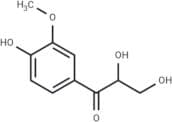
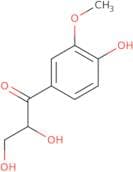
C-Veratroylglycol, identified by its CAS number 168293-10-5, is a chemical compound that features a veratroyl group linked to a glycol moiety. This compound is characterized by its structural components, which include an aromatic ring derived from veratrole, contributing to its potential biological activity and reactivity. The presence of hydroxyl groups in the glycol portion enhances its solubility in polar solvents and may influence its interaction with biological systems. C-Veratroylglycol may exhibit properties such as antioxidant activity, making it of interest in various fields, including pharmaceuticals and materials science. Its specific applications can vary, but it is often explored for its potential in drug formulation and as a chemical intermediate. As with many organic compounds, its stability, reactivity, and biological effects can be influenced by environmental conditions and the presence of other chemical species. Further research is necessary to fully elucidate its properties and potential applications in various scientific domains.
Formula:C10H12O5
InChI:InChI=1S/C10H12O5/c1-15-9-4-6(2-3-7(9)12)10(14)8(13)5-11/h2-4,8,11-13H,5H2,1H3
InChI key:InChIKey=UTXNRISXYKZJTH-UHFFFAOYSA-N
SMILES:C(C(CO)O)(=O)C1=CC(OC)=C(O)C=C1
Synonyms:- C-Veratroylglycol
- 2,3-Dihydroxy-1-(4-hydroxy-3-methoxyphenyl)-1-propanone
- 2,3-Dihydroxy-1-(4-hydroxy-3-methoxyphenyl)propan-1-one
- 1-Propanone, 2,3-dihydroxy-1-(4-hydroxy-3-methoxyphenyl)-
Sort by
Purity (%)
0
100
|
0
|
50
|
90
|
95
|
100
Found 2 products.
C-Veratroylglycol
CAS:C-Veratroylglycol shows antioxidant activity (IC50<100 uM).Formula:C10H12O5Purity:98%Color and Shape:SolidMolecular weight:212.2C-Veratroylglycol
CAS:C-Veratroylglycol is a phenolic compound, which is a type of product derived from plant sources. It is specifically isolated from various plant species, where it contributes to the structural and defense mechanisms of the plant due to its phenolic nature. The mode of action involves its ability to engage in oxidation-reduction reactions and to bind with proteins and enzymes, affecting various biochemical pathways.Purity:Min. 95%