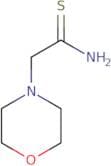
CAS 16888-43-0
:2-morpholin-4-ylethanethioamide
Description:
2-Morpholin-4-ylethanethioamide, with the CAS number 16888-43-0, is a chemical compound characterized by its unique structural features, including a morpholine ring and a thioamide functional group. The morpholine moiety contributes to its potential as a versatile building block in organic synthesis and medicinal chemistry. This compound typically exhibits moderate solubility in polar solvents due to the presence of both nitrogen and sulfur atoms, which can engage in hydrogen bonding. Its thioamide group may impart specific reactivity, making it a candidate for various chemical transformations. Additionally, the presence of the morpholine ring can influence the compound's biological activity, potentially enhancing its interaction with biological targets. The compound's stability and reactivity can be affected by environmental conditions such as pH and temperature. Overall, 2-morpholin-4-ylethanethioamide is of interest in research fields that explore its synthetic applications and biological properties, particularly in the development of pharmaceuticals and agrochemicals.
Formula:C6H12N2OS
InChI:InChI=1/C6H12N2OS/c7-6(10)5-8-1-3-9-4-2-8/h1-5H2,(H2,7,10)
SMILES:C1COCCN1CC(=N)S
Sort by
Purity (%)
0
100
|
0
|
50
|
90
|
95
|
100
Found 1 products.
2-(Morpholin-4-yl)ethanethioamide
CAS:Azapropazone is a non-steroidal anti-inflammatory drug that has been used for the treatment of chronic inflammatory conditions such as rheumatoid arthritis and osteoarthritis. Azapropazone has also been shown to be effective in the treatment of gastric ulcers. Azapropazone binds to the H2 receptor, which is the histamine receptor found on parietal cells in the stomach lining. This binding inhibits gastric acid secretion and reduces the release of histamine from these cells, thereby reducing inflammation and ulceration. Azapropazone is metabolized by cytochrome P450 enzymes, which are found in many tissues including liver, kidney, and lung tissue. The drug's major metabolite is N-desmethyl azapropazone (NDAZ), which has similar anti-inflammatory effects to azapropazone but with less risk of gastric upset and ulceration.Formula:C6H12N2OSPurity:Min. 95%Molecular weight:160.24 g/mol