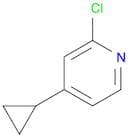
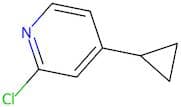
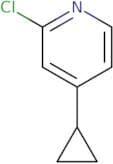
CAS 168975-75-5
:2-chloro-4-cyclopropylpyridine
- Pyridine, 2-chloro-4-cyclopropyl-
- 2-chloro-4-cyclopropylpyridine
Pyridine, 2-chloro-4-cyclopropyl-
CAS:Formula:C8H8ClNPurity:97%Color and Shape:LiquidMolecular weight:153.60882-Chloro-4-cyclopropylpyridine
CAS:2-Chloro-4-cyclopropylpyridinePurity:97%Molecular weight:153.61g/mol2-Chloro-4-cyclopropylpyridine
CAS:Formula:C8H8ClNPurity:97%Color and Shape:LiquidMolecular weight:153.612-Chloro-4-cyclopropylpyridine
CAS:2-Chloro-4-cyclopropylpyridine is a chemical compound that contains a chlorine atom. It can be synthesized in the laboratory by condensing chloroacetic acid with cyclopropyl bromide, followed by hydrolysis of the ester group. This process can also be performed using sodium methoxide and chloride as reagents, or alternatively with sodium sulfate and diisopropyl phosphite. The salt form of this compound is soluble in water, whereas the free base is insoluble. 2-Chloro-4-cyclopropylpyridine has been used as a catalyst for the synthesis of tosylates from alcohols or phenols. It is primarily used in organic synthesis because it reacts efficiently with alcohols and phenols to produce tosylates without side reactions. 2-Chloro-4-cyclopropylpyridine also reacts with chlorine gas to produce dichlorocarbene, which
Formula:C8H8ClNPurity:Min. 95%Molecular weight:153.61 g/molRef: 3D-TGA97575
Discontinued product