![Benzoic acid,2,4-dimethoxy-6-methyl-,4-[[4-[[(1-carboxyethyl)amino]carbonyl]-3-hydroxy-5-methylphe…](/_next/image/?url=https%3A%2Fstatic.cymitquimica.com%2Fcas-image%2Fthumb-webp%2F301853-benzoic-acid-24-dimethoxy-6-methyl-4-4-1-carboxyethyl-amino-carbonyl-3-hydroxy-5-methylphenoxy-carbonyl-3-hydroxy-5-methylphenylester-9ci.webp&w=3840&q=75)
CAS 169181-28-6
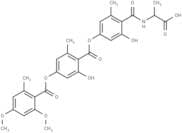
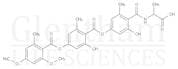
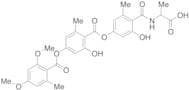
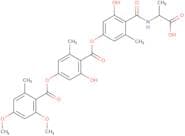
:Benzoic acid,2,4-dimethoxy-6-methyl-,4-[[4-[[(1-carboxyethyl)amino]carbonyl]-3-hydroxy-5-methylphenoxy]carbonyl]-3-hydroxy-5-methylphenylester (9CI)
- AmidepsineA
- Fo 2942A
Amidepsine A
CAS:Amidepsine A is a natural product for research related to life sciences. The catalog number is T22187 and the CAS number is 169181-28-6.Color and Shape:SolidMolecular weight:567.541Amidepsine A
CAS:Amidepsine A is a cyclodepsipeptide, which is derived from fungal sources, particularly marine fungi. This compound functions by inhibiting microtubule polymerization, a mode of action that disrupts cell division and affects cellular structural integrity. Amidepsine A's ability to interfere with microtubule dynamics makes it a point of interest for scientific research, particularly in the context of therapeutic applications against cancer. Inhibition of microtubule polymerization can lead to the arrest of the cell cycle, inducing apoptosis in rapidly dividing cells. This mechanism positions Amidepsine A as a potential candidate for anticancer drug development. Researchers are engaged in exploring its efficacy and specificity, seeking insights into its pharmacokinetics and potential for incorporation into chemotherapeutic regimens. The unique origin from marine fungi also prompts investigation into its biosynthesis and ecological role, contributing to the broader understanding of natural product drug discovery.
Formula:C29H29NO11Purity:Min. 95%Molecular weight:567.54 g/molRef: 3D-UGA18128
Discontinued product