CAS 17012-22-5
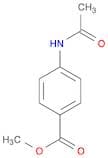
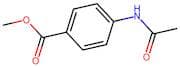
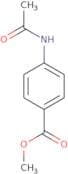
:Methyl 4-(acetylamino)benzoate
Description:
Methyl 4-(acetylamino)benzoate, with the CAS number 17012-22-5, is an organic compound that belongs to the class of esters. It is characterized by the presence of a methyl ester group and an acetylamino substituent on a benzoate ring. This compound typically appears as a white to off-white solid or crystalline powder. It is soluble in organic solvents such as ethanol and acetone, but its solubility in water is limited due to its hydrophobic aromatic structure. Methyl 4-(acetylamino)benzoate is often used in organic synthesis and may serve as an intermediate in the production of pharmaceuticals or agrochemicals. Its chemical structure suggests potential applications in medicinal chemistry, particularly in the development of compounds with biological activity. As with many organic compounds, it is important to handle it with care, observing appropriate safety protocols to mitigate any risks associated with its use.
Formula:C10H11NO3
InChI:InChI=1S/C10H11NO3/c1-7(12)11-9-5-3-8(4-6-9)10(13)14-2/h3-6H,1-2H3,(H,11,12)
InChI key:InChIKey=QKWTXJSLAZKYGV-UHFFFAOYSA-N
SMILES:N(C(C)=O)C1=CC=C(C(OC)=O)C=C1
Synonyms:- p-(Methoxycarbonyl)acetanilide
- Benzoic acid, p-acetamido-, methyl ester
- Methyl 4-(acetylamino)benzoate
- Benzoic acid, 4-(acetylamino)-, methyl ester
- Methyl p-acetamidobenzoate
Sort by
Purity (%)
0
100
|
0
|
50
|
90
|
95
|
100
Found 4 products.
Methyl 4-acetamidobenzoate
CAS:Formula:C10H11NO3Purity:98%Color and Shape:SolidMolecular weight:193.1992Methyl 4-(acetylamino)benzoate
CAS:Methyl 4-(acetylamino)benzoatePurity:98%Molecular weight:193.19924g/mol4-Acetylamino-benzoic acid methyl ester
CAS:4-Acetylamino-benzoic acid methyl ester (AABA) is a ligand that has been used to study the transfer mechanism of an anti-cancer drug. It has been shown to be reactive with frequencies in the range of 10 to 10 Hz. AABA has also been used in biochemical research and molecular electrostatic potential studies, as well as drug development. The molecular orbital theory was applied to describe the interaction between AABA and a molecule, which showed vibrational descriptors for the molecule's electron distribution.Formula:C10H11NO3Purity:Min. 95%Molecular weight:193.2 g/mol