CAS 1705-85-7
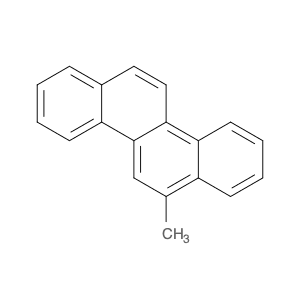
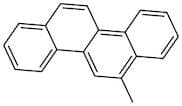
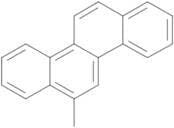
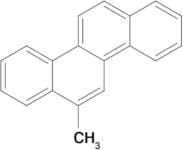
:6-Methylchrysene
Description:
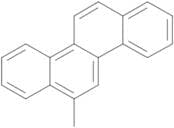
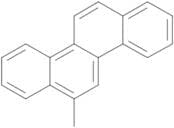
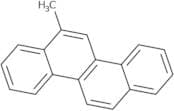
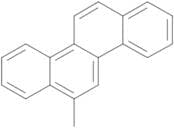
6-Methylchrysene is a polycyclic aromatic hydrocarbon (PAH) characterized by its fused ring structure, which consists of multiple aromatic rings. It is derived from chrysene, with a methyl group attached at the sixth position of the chrysene framework. This compound is typically a colorless to pale yellow solid and is known for its hydrophobic nature, making it poorly soluble in water but soluble in organic solvents. 6-Methylchrysene is of interest in environmental chemistry due to its presence in fossil fuels and combustion products, and it has been studied for its potential carcinogenic properties. The compound is often analyzed in the context of environmental pollution and human health, particularly regarding its role as a marker for exposure to PAHs. Its molecular structure contributes to its stability and persistence in the environment, raising concerns about bioaccumulation and long-term ecological effects. Safety measures should be taken when handling this substance, as it may pose health risks upon exposure.
Formula:C19H14
InChI:InChI=1S/C19H14/c1-13-12-19-16-8-3-2-6-14(16)10-11-18(19)17-9-5-4-7-15(13)17/h2-12H,1H3
InChI key:InChIKey=ASVDRLYVNFOSCI-UHFFFAOYSA-N
SMILES:CC1=CC2=C(C=3C1=CC=CC3)C=CC=4C2=CC=CC4
Synonyms:- 67405 6-Methylchrysene (Purity)
- Brn 1954732
- Ccris 6759
- Chrysene, 6-methyl-
- 6-Methylchrysene
- 4-05-00-02573 (Beilstein Handbook Reference)
Sort by
Purity (%)
0
100
|
0
|
50
|
90
|
95
|
100
Found 8 products.
6-Methylchrysene 10 µg/mL in Acetonitrile
CAS:Formula:C19H14Color and Shape:Single SolutionMolecular weight:242.316-Methyl Chrysene
CAS:Controlled ProductApplications 6-Methylchrysene is one of the methylated chrysenes (MeChry), as an aryl hydrocarbon receptor (AhR) agonist. Methylated chrysenes (MeChry) are important cigarette smoke constituents and 6-MeChry has been listed as possibly carcinogenic to humans.
Not a dangerous good if item is equal to or less than 1g/ml and there is less than 100g/ml in the package
References Amin, S. et al.: Cancer Res., 45, 6406 (1985); Blaha, L. et al.: Toxicol. Sci., 65, 43 (2002); Brack, W. et al.: Environ. Sci. Technol., 37, 3062 (2003); Andrysik, Z. et al.: Mutat. Res., 615, 87 (2007);Formula:C19H14Color and Shape:WhiteMolecular weight:242.316-Methyl Chrysene
CAS:6-Methyl chrysene is a potent inducer of liver cancer in mice. It is also an aromatic hydrocarbon that has been shown to be tumorigenic and carcinogenic in rats exposed to the chemical for three months. 6-Methyl chrysene readily crosses the blood-brain barrier and enters the central nervous system, where it can cause cell lysis. The chemical binds covalently to DNA, forming adducts with guanine and cytosine residues, which inhibits DNA replication and transcription. 6-Methyl chrysene can also inhibit other biochemical properties, such as cellular respiration and protein synthesis.Formula:C19H14Purity:Min. 95%Molecular weight:242.31 g/mol6-Methylchrysene 1000 µg/mL in Dichloromethane
CAS:Controlled ProductFormula:C19H14Color and Shape:Single SolutionMolecular weight:242.31