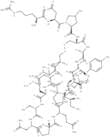
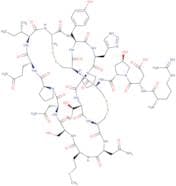
CAS 170663-33-9
:Alpha-Conotoxin El
Description:
Alpha-Conotoxin El is a peptide derived from the venom of the Conus snail, specifically Conus elegans. This substance is characterized by its ability to selectively inhibit nicotinic acetylcholine receptors, which are crucial for neurotransmission in both the peripheral and central nervous systems. The structure of Alpha-Conotoxin El consists of a relatively small chain of amino acids, typically featuring disulfide bonds that contribute to its stability and biological activity. Its specificity for certain receptor subtypes makes it a valuable tool in neuropharmacology and a potential candidate for therapeutic applications, particularly in pain management and neurological disorders. Additionally, Alpha-Conotoxin El is of interest in research for its potential to provide insights into the mechanisms of synaptic transmission and receptor function. As with many conotoxins, its potency and selectivity highlight the complex interactions between venom components and biological systems, making it a subject of ongoing scientific investigation.
Sort by
Purity (%)
0
100
|
0
|
50
|
90
|
95
|
100
Found 2 products.
α-Conotoxin EI
CAS:Selective antagonist of neuromuscular nicotinic receptors α1β1γδFormula:C83H125N27O27S5Purity:98%Color and Shape:SolidMolecular weight:2093.37Alpha-Conotoxin EI (free acid) trifluoroacetate salt
CAS:Controlled ProductAlpha-conotoxin EI is an analog of the amino acid alpha-conotoxin. It is a potent inhibitor of acetylcholine release from nerve terminals in a competitive manner, and it has been shown to be active against Stenotrophomonas maltophilia and other bacterial infections. This analog binds to the receptor binding site on acetylcholine receptors, exhibiting diagnostic properties as well as potent inhibition of agonist binding. Alpha-conotoxin EI is not orally active due to its strong hydrolysis by esterases when taken orally. However, it can be administered intravenously or intramuscularly with high bioavailability. The drug also exhibits anti-inflammatory properties that are thought to be due to its ability to inhibit prostaglandin synthesis.
Formula:C83H124N26O28S5Purity:Min. 95%Molecular weight:2,094.36 g/mol