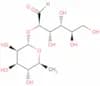
CAS 17074-02-1
:Neohesperidose
Description:
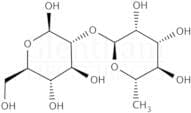
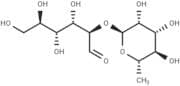
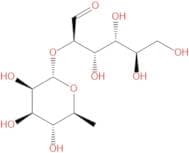
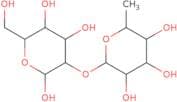
Neohesperidose, with the CAS number 17074-02-1, is a glycoside derived from the flavonoid hesperidin, which is commonly found in citrus fruits. It is characterized by its sweet taste and is often used as a natural sweetener and flavor enhancer in food and beverage applications. Neohesperidose is known for its low-caloric content, making it an attractive alternative to traditional sugars. Chemically, it consists of a neohesperidose moiety linked to a sugar unit, contributing to its sweetness profile. This compound is soluble in water and exhibits stability under various pH conditions, which enhances its utility in different formulations. Additionally, neohesperidose has been studied for its potential health benefits, including antioxidant properties and possible roles in metabolic regulation. Its safety profile has been evaluated, and it is generally recognized as safe (GRAS) for consumption. Overall, neohesperidose represents a versatile ingredient in the food industry, combining sweetness with potential health advantages.
Formula:C12H22O10
InChI:InChI=1S/C12H22O10/c1-4-7(16)10(19)11(20)12(21-4)22-6(3-14)9(18)8(17)5(15)2-13/h3-13,15-20H,2H2,1H3/t4-,5+,6-,7-,8+,9+,10+,11+,12-/m0/s1
InChI key:InChIKey=BQEBASLZIGFWEU-YMKBBEOCSA-N
SMILES:O([C@H]([C@H]([C@@H]([C@@H](CO)O)O)O)C=O)[C@H]1[C@H](O)[C@H](O)[C@@H](O)[C@H](C)O1
Synonyms:- 2-O-(6-Deoxy-alpha-L-mannopyranosyl)-D-glucose
- 2-O-(6-Deoxy-α-<span class="text-smallcaps">L</smallcap>-mannopyranosyl)-<smallcap>D</span>-glucose
- <span class="text-smallcaps">D</smallcap>-Glucose, 2-O-(6-deoxy-α-<smallcap>L</span>-mannopyranosyl)-
- Neohesperidose
- 2-O-(6-Deoxy-α-L-mannopyranosyl)-D-glucose
- D-Glucose, 2-O-(6-deoxy-α-L-mannopyranosyl)-
Sort by
Purity (%)
0
100
|
0
|
50
|
90
|
95
|
100
Found 4 products.
Neohesperidose
CAS:Neohesperidose is a natural product isolated from species of typha.Formula:C12H22O10Purity:98%Color and Shape:SolidMolecular weight:326.3Neohesperidose
CAS:Neohesperidose is a disaccharide carbohydrate, which is naturally derived from certain citrus fruits and plants. It is primarily sourced from the hydrolysis of neohesperidin, a flavonoid glycoside commonly found in the peels of citrus fruits such as oranges and grapefruits. The mode of action of neohesperidose involves interaction with taste receptors, where it exhibits notable sweetening properties, though it is not as sweet as sucrose.
Formula:C12H22O10Purity:Min. 95%Color and Shape:PowderMolecular weight:326.3 g/mol