CAS 17075-03-5
:4-Pyrenamine
Description:
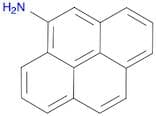
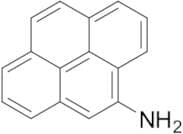
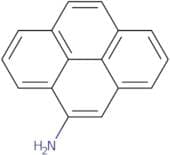
4-Pyrenamine, with the CAS number 17075-03-5, is an organic compound characterized by its pyrene backbone, which is a polycyclic aromatic hydrocarbon. This substance features an amino group (-NH2) positioned at the 4th carbon of the pyrene structure, contributing to its chemical reactivity and potential applications. 4-Pyrenamine is known for its fluorescence properties, making it useful in various analytical and biological applications, such as fluorescence microscopy and as a fluorescent probe in biochemical assays. The compound is typically soluble in organic solvents, and its solubility can vary depending on the solvent used. Additionally, 4-Pyrenamine can participate in various chemical reactions, including electrophilic substitutions and coupling reactions, which are valuable in synthetic organic chemistry. Its unique structural features and reactivity make it a subject of interest in materials science and organic synthesis. Safety data should be consulted for handling and usage, as with any chemical substance, to ensure proper precautions are taken.
Formula:C16H11N
InChI:InChI=1S/C16H11N/c17-14-9-12-5-1-3-10-7-8-11-4-2-6-13(14)16(11)15(10)12/h1-9H,17H2
InChI key:InChIKey=AYBSKADMMKVOIV-UHFFFAOYSA-N
SMILES:NC=1C=2C3=C4C(C1)=CC=CC4=CC=C3C=CC2
Synonyms:- 4-Pyrenamine
- Pyren-4-Amine
- Pyren-4-Ylamine
- 4-Aminopyrene
Sort by
Purity (%)
0
100
|
0
|
50
|
90
|
95
|
100
Found 3 products.
4-Aminopyrene
CAS:Controlled Product<p>Applications 4-AMINOPYRENE (cas# 17075-03-5) is a useful research chemical.<br></p>Formula:C16H11NColor and Shape:NeatMolecular weight:217.274-Aminopyrene
CAS:<p>4-Aminopyrene is an aromatic amine that contains a nitro group. It has been used in biological studies to study the metabolism of amines, and chromatographic and mass spectrometric detection methods have been developed for its determination. 4-Aminopyrene also has the ability to form isomers through substitution on the N atom. The activation energy for this process is 14.3 kcal/mol. 4-Aminopyrene has been shown to be cytotoxic and mutagenic in vitro, and it can inhibit protein synthesis in bacteria by inhibiting RNA synthesis at the ribosome level. It has also been shown to induce changes in cell morphology and stimulate morphological differentiation of human promyelocytic leukemia cells (HL-60).</p>Purity:Min. 95%