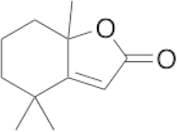
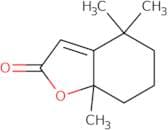
CAS 17092-92-1
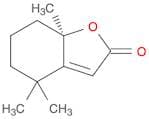
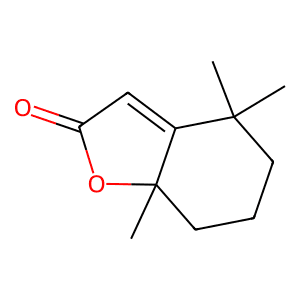
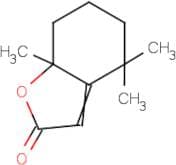
:(-)-Dihydroactinidiolide
- (+/-)-(2,6,6,-Trimethyl-2-hydroxycyclohexylidene)acetic acid gamma-lactone
- (2,6,6-Trimethyl-2-Hydroxycyclohexylidene)Acetic Acid Lactone
- (7AR)-4,4,7a-trimethyl-2,4,5,6,7,7a-hexahydro-1-benzofuran-2-one
- (7aR)-5,6,7,7a-Tetrahydro-4,4,7a-trimethyl-2(4H)-benzofuranone
- (R)-5,6,7,7a-Tetrahydro-4,4,7a-trimethyl-2(4H)-benzofuranone
- (R)-Dihydroactinidiolide
- 2(4H)-Benzofuranone, 5,6,7,7a-tetrahydro-4,4,7a-trimethyl-
- 2(4H)-Benzofuranone, 5,6,7,7a-tetrahydro-4,4,7a-trimethyl-, (7aR)-
- 2(4H)-Benzofuranone, 5,6,7,7a-tetrahydro-4,4,7a-trimethyl-, (R)-
- 2(4H)-Benzofuranone, 5,6,7,7a-tetrahydro-4,4,7a-trimethyl-, (S)-
- 4,4,7a-Trimethyl-5,6,7,7a-tetrahydro-1-benzofuran-2(4H)-one
- 5,6,7,7a-Tetrahydro-4,4,7a-trimethyl-2(4H)-benzofuranone
- Actinidiolide, dihydro-
- Nsc 357087
- (R)-5,6,7,7a-Tetrahydro-4,4,7a-trimethylbenzofuran-2(4H)-one
- (R)-4,4,7a-Trimethyl-5,6,7,7a-tetrahydrobenzofuran-2(4H)-one
- dihydroactindiolide
- FEMA 4020
- 2(4H)-Benzofuranone, 5,6,7,7a-tetrahydro-4,4,7a-trimethyl-(8CI)
- 4,4,7a-trimethyl-6,7-dihydro-5H-1-benzofuran-2-one
- (7aR)-4,4,7a-trimethyl-6,7-dihydro-5H-benzofuran-2-one
- (S)-2,6,6-Trimethyl-2-hydroxycyclohexylidene)acetic acid lactone
- (S)-dihydroactinidiolide
- (7aR)-5,6,7,7a-Tetrahydro-4,4,7aα-trimethyl-2(4H)-benzofuranone
- (R)-5,6,7,7a-tetrahydro-4,4,7atrimethyl-2(4H)-Benzofuranone
- 2(4H)-Benzofuranone,5,6,7,
- (R)-5,6,7,7alpha-Tetrahydro-4,4,7a-trimethyl-2(4H)-benzofuranone
- 2(4H)-Benzofuranone
- (2,6,6-Trimethyl-2-hydroxycyclohexylidene)acetic acid lacton
- 4,4,7a-Trimethyl-5,6,7,7a-tetrahydrobenzofuran-2(4H)-one(R-Dihydroactinidiolide)
- (2,6,6-TriMethyl-2-hydroxycyclohexylidene)acetic acid laCLone
- Dihydrokiwi lactone
- Dihydroactinidioli
- See more synonyms
2(4H)-Benzofuranone, 5,6,7,7a-tetrahydro-4,4,7a-trimethyl-, (7aR)-
CAS:Formula:C11H16O2Purity:98%Color and Shape:SolidMolecular weight:180.2435(2,6,6-Trimethyl-2-hydroxycyclohexylidene)acetic acid lactone
CAS:(2,6,6-Trimethyl-2-hydroxycyclohexylidene)acetic acid lactonePurity:98% 99%eeMolecular weight:180.24g/molDihydroactinidiolide
CAS:Dihydroactinidiolide (R-(-)Dihydro actinidiolide)is avolatileterpene. It has a sweet,tea-likeodorand is used as a fragrance.Formula:C11H16O2Purity:99.94%Color and Shape:Less Crystal Colorless CrystalMolecular weight:180.24R-Dihydroactinidiolide
CAS:Controlled ProductFormula:C11H16O2Color and Shape:NeatMolecular weight:180.2444,4,7a-Trimethyl-5,6,7,7a-tetrahydrobenzofuran-2(4H)-one
CAS:Formula:C11H16O2Purity:95.0%Color and Shape:SolidMolecular weight:180.247R-Dihydroactinidiolide
CAS:R-Dihydroactinidiolide is a carotenoid found in tobacco. It has been shown to inhibit the growth of neuroblastoma cells and other carcinoma cell lines in vitro, as well as to induce DNA damage and apoptosis in these cells. The surface methodology used for this study provides evidence that dihydroactinidiolide binds to specific receptors on the surface of cancer cells, which may be involved in the genotoxic effects observed. R-Dihydroactinidiolide can be metabolized by various enzymes into different metabolites with different biochemical properties and biological activities. This process involves cleavage of the acetate side chain by an enzyme called lipoxygenase, followed by oxidation of one or more double bonds on the ring system. The reaction mechanism is not yet known.
Formula:C11H16O2Purity:Min. 95%Color and Shape:PowderMolecular weight:180.24 g/molRef: 3D-FD33930
Discontinued product