CAS 17180-93-7
:4-Chloropyrimidine
Description:
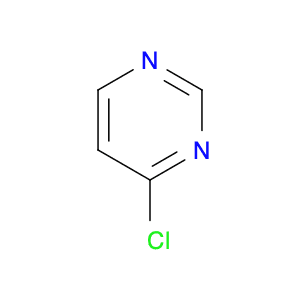
4-Chloropyrimidine is a heterocyclic organic compound characterized by a pyrimidine ring with a chlorine substituent at the 4-position. Its molecular formula is C4H4ClN3, indicating the presence of four carbon atoms, four hydrogen atoms, one chlorine atom, and three nitrogen atoms. This compound is typically a colorless to pale yellow liquid or solid, depending on its form and purity. 4-Chloropyrimidine is known for its role as an intermediate in the synthesis of various pharmaceuticals and agrochemicals, owing to its reactivity and ability to participate in nucleophilic substitution reactions. It exhibits moderate solubility in polar solvents and is relatively stable under standard conditions. However, like many chlorinated compounds, it should be handled with care due to potential toxicity and environmental concerns. Its applications extend to the development of biologically active molecules, making it a valuable compound in medicinal chemistry and research.
Formula:C4H3ClN2
InChI:InChI=1S/C4H3ClN2/c5-4-1-2-6-3-7-4/h1-3H
InChI key:InChIKey=DBPKMSBWOKAKLA-UHFFFAOYSA-N
SMILES:ClC=1C=CN=CN1
Synonyms:- 4-Chlopyrimidine
- 4-Chloropyrimidine
- Pyrimidine, 4-chloro-
Sort by
Purity (%)
0
100
|
0
|
50
|
90
|
95
|
100
Found 2 products.
4-Chloropyrimidine
CAS:4-Chloropyrimidine is a nucleophilic compound that is synthesized by the reaction of acetone with hydrogen chloride. The proton NMR spectrum of 4-chloropyrimidine has been determined and it has been shown to be active against herpes simplex virus in clinical studies. The synthesis of this compound is accomplished using a flow system. It can be prepared from trifluoroacetic acid and carbon disulphide or from sodium hydroxide and amines. The structure of 4-chloropyrimidine was determined by X-ray crystallography. It reacts with organic compounds to form new compounds, such as fluorine, which are often toxic to humans or animals.
Formula:C4H3ClN2Purity:90%MinColor and Shape:Off-White PowderMolecular weight:114.53 g/mol