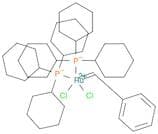
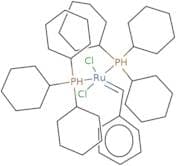
CAS 172222-30-9
:Benzylidene-bis(tricyclohexylphosphine)dichlororuthenium
- Ruthenium,Dichloro(Phenylmethylene)Bis (Tricyclohexylphosphine)
- Benzylidene-Bis(Triphenylphosphine)Ruthenium Dichloride
- Bis(Tricyclohexylphosphine)Benzylideneruthenium(Iv) Dichloride
- Grubbs Catalyst
- Grubb's Catalyst
- Grubbs Catalyst, 1st Generation
- Bis(Tricyclohexylphosphine) Benzylidine Ruthenium(Iv) Chloride
- Benzylidene(Dichloro)Ruthenium-Tricyclohexylphosphane (1:2)
- Grubbs 1st
- Grubbs 1st Catalyst
Benzylidene-bis(tricyclohexylphosphine)dichlororuthenium, 97% [Grubbs Catalyst Gen. 1]
CAS:Benzylidene-bis(tricyclohexylphosphine)dichlororuthenium, 97% [Grubbs Catalyst Gen. 1]
Formula:C43H72C2P2RuPurity:97%Color and Shape:purple pwdr.Molecular weight:822.97Grubbs Catalyst 1st Generation
CAS:Formula:C43H74Cl2P2RuPurity:98%Color and Shape:SolidMolecular weight:824.9712Bis(tricyclohexylphosphine)benzylidine ruthenium(IV) dichloride
CAS:Bis(tricyclohexylphosphine)benzylidine ruthenium(IV) dichlorideFormula:C8H8·C36H66P2·Cl2RuPurity:98%Color and Shape: purple solidMolecular weight:836.98g/molBenzylidenebis(tricyclohexylphosphine)dichlororuthenium
CAS:Formula:C43H72Cl2P2RuPurity:95%Color and Shape:Solid, Violet powderMolecular weight:822.97Grubbs Catalyst, 1st Generation
CAS:Controlled ProductApplications Grubbs Catalyst, 1st Generation is a ruthenium-based olefin metathesis catalyst.
References Rosen, E.L., et. al.: J. Organomet. Chem., 745 (2013)Formula:C43H72Cl2P2RuColor and Shape:NeatMolecular weight:822.96Grubbs catalyst I
CAS:Grubbs catalyst I is an innovative, preparative, and synthetic catalyst that is used for ring-opening metathesis reactions. The catalyst is a ruthenium complex that can be prepared in one step from commercially available Grubbs' second generation catalyst. It has been shown to be effective in the synthesis of polycyclic aromatic hydrocarbons and microcapsules. Grubbs I catalyzes the transfer of a proton from a phenyl methylene ligand to a ruthenium complex with high efficiency. This process is believed to occur through a concerted mechanism where the ligand coordinates with the metal center and transfers its proton.
Formula:C43H72Cl2P2RuPurity:Min. 95%Color and Shape:PowderMolecular weight:822.95 g/mol
![Benzylidene-bis(tricyclohexylphosphine)dichlororuthenium, 97% [Grubbs Catalyst Gen. 1]](/_next/image/?url=https%3A%2Fstatic.cymitquimica.com%2Fproducts%2F08%2Fthumb%2F44-0944.jpg&w=3840&q=75)