CAS 17258-26-3
:Pyridazine, 3-chloro-4,6-dimethyl-
Description:
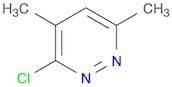
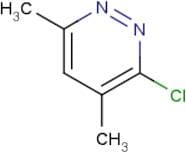
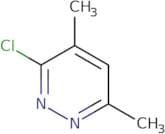
Pyridazine, 3-chloro-4,6-dimethyl- is a heterocyclic organic compound characterized by a six-membered ring containing two nitrogen atoms at positions 1 and 2, with additional substituents at the 3, 4, and 6 positions. The presence of a chlorine atom at the 3-position and two methyl groups at the 4 and 6 positions contributes to its unique chemical properties. This compound is typically a colorless to pale yellow liquid or solid, depending on its physical state at room temperature. It is known for its potential applications in pharmaceuticals and agrochemicals due to its biological activity. Pyridazine derivatives often exhibit interesting reactivity, making them valuable in synthetic organic chemistry. The compound's molecular structure influences its solubility, stability, and reactivity, which are essential for its use in various chemical reactions and formulations. Safety data should be consulted for handling and storage, as halogenated compounds can pose health and environmental risks.
Formula:C6H7ClN2
Sort by
Purity (%)
0
100
|
0
|
50
|
90
|
95
|
100
Found 4 products.
3-Chloro-4,6-dimethylpyridazine
CAS:Formula:C6H7ClN2Purity:95%Color and Shape:SolidMolecular weight:142.58623-Chloro-4,6-dimethylpyridazine
CAS:3-Chloro-4,6-dimethylpyridazinePurity:≥95%Molecular weight:142.59g/mol3-Chloro-4,6-dimethylpyridazine
CAS:3-Chloro-4,6-dimethylpyridazine is a chlorinated derivative of the pyridine family of compounds. It has been synthesized by the reaction of azides with sulfur and aminopyridazines with cinnolines. 3-Chloro-4,6-dimethylpyridazine can be used in research as a medicinal agent for treating bacterial infections. It also has anti-inflammatory properties that are related to its ability to inhibit prostaglandin synthesis. The compound was found to have potent antibacterial activity against methicillin resistant Staphylococcus aureus (MRSA) and Clostridium perfringens.Formula:C6H7ClN2Purity:Min. 95%Molecular weight:142.59 g/mol