CAS 17311-31-8
:2,3-Quinoxalinedimethanol, 1,4-dioxide
Description:
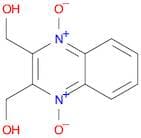
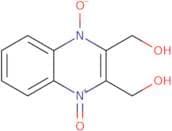
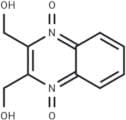
2,3-Quinoxalinedimethanol, 1,4-dioxide, with the CAS number 17311-31-8, is a chemical compound characterized by its unique bicyclic structure, which includes a quinoxaline moiety. This compound features two hydroxymethyl groups (-CH2OH) attached to the 2 and 3 positions of the quinoxaline ring, contributing to its potential reactivity and solubility in various solvents. The presence of the 1,4-dioxide functionality indicates that it has two oxygen atoms incorporated into the ring structure, which can influence its electronic properties and reactivity. Typically, compounds like this may exhibit biological activity, making them of interest in medicinal chemistry and drug development. They may also participate in various chemical reactions, including oxidation and condensation reactions, due to the functional groups present. Overall, 2,3-Quinoxalinedimethanol, 1,4-dioxide is a versatile compound with potential applications in pharmaceuticals and organic synthesis, although specific applications would depend on further research into its properties and behavior in different chemical environments.
Formula:C10H10N2O4
InChI:InChI=1S/C10H10N2O4/c13-5-9-10(6-14)12(16)8-4-2-1-3-7(8)11(9)15/h1-4,13-14H,5-6H2
InChI key:InChIKey=DOIGHQCAQBRSKI-UHFFFAOYSA-N
SMILES:O=N=1C2=C(N(=O)=C(CO)C1CO)C=CC=C2
Synonyms:- (1,4-Dioxidoquinoxaline-2,3-Diyl)Dimethanol
- 2,3-Bis(Hydroxymethyl)Quinoxaline-1,4-Diium-1,4-Bis(Olate)
- 2,3-Bis(hydroxymethyl)quinoxaline-1,4-di-N-oxide
- 2,3-Di(hydroxymethyl)quinoxaline 1,4-di-N-oxide
- 2,3-Di(hydroxymethyl)quinoxaline di-N-oxide
- 2,3-Quinoxalinedimethanol, 1,4-Dioxide
- Dioxidine
- Dioxydine
- Farmoxidin
- Mastoxidine
- Metrosept
Sort by
Purity (%)
0
100
|
0
|
50
|
90
|
95
|
100
Found 6 products.
2,3-Bis(hydroxymethyl)-1-oxoquinoxalin-1-ium-4(1H)-olate
CAS:Formula:C10H10N2O4Color and Shape:SolidMolecular weight:222.19742,3-Bis(Hydroxymethyl)Quinoxaline 1,4-Dioxide
CAS:2,3-Bis(Hydroxymethyl)Quinoxaline 1,4-DioxidePurity:99%Molecular weight:222.2g/molDioxidine
CAS:Controlled ProductApplications Dioxidine is a useful compound for identification of triazole and imidazole derivatives as antitubercular agents.
References Stanley, S., et al.: ACS Chem. Bio., 7, 1377 (2012);Formula:C10H10N2O4Color and Shape:YellowMolecular weight:222.197(1,4-Dioxidoquinoxaline-2,3-diyl)dimethanol
CAS:Polymyxin B is a cationic peptide antibiotic that is effective in the treatment of infectious diseases. It has been shown to inhibit growth of Gram-negative bacteria by binding to the outer membrane and disrupting osmotic balance. Polymyxin B has been shown to be toxic to liver cells, but it can be used as an antimicrobial agent in combination with ethylene diamine and clastogenic agents such as hydrochloric acid and hydrogen peroxide. This drug also has genotoxic effects. Polymyxin B has high resistance to hydrolysis by hydroxyl group-containing enzymes, making it a broad-spectrum antimicrobial agent that is active against Gram-positive bacteria, Gram-negative bacteria, and mycobacteria.Formula:C10H10N2O4Purity:Min. 95%Color and Shape:PowderMolecular weight:222.2 g/molDioxidine
CAS:Dioxidine is an antimicrobial agent that can inhibit bacterial growth. It is utilized in research on pyogenic infections.Formula:C10H10N2O4Color and Shape:SolidMolecular weight:222.197