CAS 17351-95-0
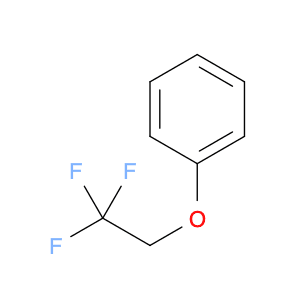
:(2,2,2-trifluoroethoxy)benzene
Description:
(2,2,2-Trifluoroethoxy)benzene, with the CAS number 17351-95-0, is an organic compound characterized by the presence of a benzene ring substituted with a trifluoroethoxy group. This compound features a trifluoromethyl group (-CF3) attached to an ethoxy group (-O-CH2-CH3), which contributes to its unique chemical properties. The trifluoromethyl group enhances the compound's lipophilicity and stability, making it less reactive compared to similar compounds without fluorine substituents. (2,2,2-Trifluoroethoxy)benzene is typically a colorless liquid at room temperature and exhibits low volatility. Its solubility in organic solvents is high, while its solubility in water is limited due to the hydrophobic nature of the fluorinated group. This compound is of interest in various applications, including as a solvent or intermediate in organic synthesis, and may also be studied for its potential effects in biological systems due to the presence of fluorine. Safety precautions should be taken when handling this compound, as fluorinated compounds can exhibit unique toxicological profiles.
Formula:C8H7F3O
InChI:InChI=1/C8H7F3O/c9-8(10,11)6-12-7-4-2-1-3-5-7/h1-5H,6H2
SMILES:c1ccc(cc1)OCC(F)(F)F
Synonyms:- Fxff1Or [Wln]
- Phenyl 2,2,2-trifluoroethyl ether
- (2,2,2-Trifluoroethoxy)benzene
Sort by
Purity (%)
0
100
|
0
|
50
|
90
|
95
|
100
Found 3 products.
2,2,2-Trifluoroethoxybenzene
CAS:2,2,2-TrifluoroethoxybenzenePurity:98%Color and Shape:LiquidMolecular weight:176.14g/mol2,2,2-Trifluoroethoxybenzene
CAS:2,2,2-Trifluoroethoxybenzene is an acid catalyst that is used in the production of chlorobenzene. This organic compound has been shown to produce a number of products when heated with dihydroxybenzene. These products include acid chlorides and benzoyl chloride that can be used as intermediates in other chemical reactions. 2,2,2-Trifluoroethoxybenzene has also been shown to react with alkali metals to produce inorganic acids. In addition to acting as an acid catalyst, this compound may be used in the synthesis of flecainide, which is an antiarrhythmic drug. This product also reacts with carbonyl groups and acidic molecules such as halogens to form alkali metal carboxylates and alkanes.
Formula:C8H7F3OPurity:Min. 95%Molecular weight:176.14 g/mol