CAS 17374-48-0
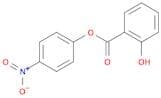
:Salicylicacidnitrophenylester
Description:
Salicylic acid nitrophenyl ester, identified by its CAS number 17374-48-0, is an organic compound that features a salicylic acid moiety modified by the addition of a nitrophenyl group. This compound typically exhibits characteristics associated with both salicylic acid and nitrophenyl derivatives, including potential applications in pharmaceuticals and agrochemicals. It may possess biological activity, particularly in relation to anti-inflammatory or analgesic properties, owing to the salicylic acid component. The nitrophenyl group can influence the compound's solubility, stability, and reactivity, potentially enhancing its efficacy in various chemical reactions or biological interactions. Additionally, the presence of nitro groups often contributes to the compound's electronic properties, which can affect its behavior in different environments. As with many organic compounds, safety and handling precautions are essential, as nitro compounds can be sensitive and may pose health risks. Overall, salicylic acid nitrophenyl ester represents a unique intersection of functional groups that may be explored for diverse applications in chemical research and development.
- Salicylic acid 4-nitrophenyl ester
Sort by
Purity (%)
0
100
|
0
|
50
|
90
|
95
|
100
Found 3 products.
Benzoic acid, 2-hydroxy-, 4-nitrophenyl ester
CAS:Formula:C13H9NO5Purity:98%Color and Shape:SolidMolecular weight:259.21434-Nitrophenyl Salicylate
CAS:4-Nitrophenyl salicylate is an organic compound that is a derivative of phenol. This colourless solid has been shown to be a good catalyst for amine oxidation reactions. It also stabilizes organic compounds and prevents their oxidation by oxygen and other reactive species, such as free radicals, peroxides, and heavy metals. 4-Nitrophenyl salicylate reacts with amines to produce alicyclic nitrosoamines, which are more stable than the parent amine. The reaction mechanism of 4-nitrophenyl salicylate is not yet fully understood; however, it may involve nucleophilic attack on the aromatic ring followed by resonance stabilization of the resulting product.Purity:Min. 95%Color and Shape:PowderMolecular weight:259.21 g/mol