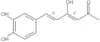
CAS 173933-40-9
:Hispolon
Description:
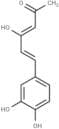
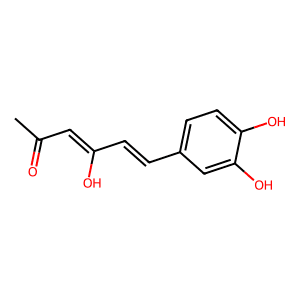
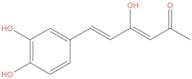
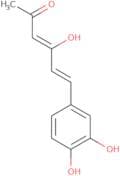
Hispolon, with the CAS number 173933-40-9, is a naturally occurring compound primarily derived from certain species of fungi, particularly those in the genus Phellinus. It is classified as a phenolic compound and is known for its potential biological activities, including antioxidant, anti-inflammatory, and antimicrobial properties. Hispolon has garnered interest in the field of medicinal chemistry due to its ability to modulate various cellular pathways, which may contribute to its therapeutic effects. The compound typically exhibits a complex structure characterized by multiple aromatic rings and hydroxyl groups, which are responsible for its reactivity and interaction with biological systems. Research into hispolon is ongoing, with studies exploring its potential applications in pharmaceuticals, particularly in the context of cancer treatment and other health-related benefits. However, as with many natural products, further investigation is necessary to fully understand its mechanisms of action and potential side effects.
Formula:C12H12O4
InChI:InChI=1S/C12H12O4/c1-8(13)6-10(14)4-2-9-3-5-11(15)12(16)7-9/h2-7,14-16H,1H3/b4-2+,10-6-
InChI key:InChIKey=QDVIEIMMEUCFMW-QXYPORFMSA-N
SMILES:C(=C/C(=C/C(C)=O)/O)\C1=CC(O)=C(O)C=C1
Synonyms:- 3,5-Hexadien-2-one, 6-(3,4-dihydroxyphenyl)-4-hydroxy-, (3Z,5E)-
- Hispolon
- 3,5-Hexadien-2-one, 6-(3,4-dihydroxyphenyl)-4-hydroxy-, (Z,E)-
- (3Z,5E)-6-(3,4-Dihydroxyphenyl)-4-hydroxy-3,5-hexadien-2-one
- Hispolone
Sort by
Purity (%)
0
100
|
0
|
50
|
90
|
95
|
100
Found 4 products.
Hispolon
CAS:Hispolon: polyphenol from Phellinus linteus with anti-cancer, anti-diabetic, antiviral, and hepatoprotective properties.Formula:C12H12O4Purity:99.94%Color and Shape:SoildMolecular weight:220.22Hispolon
CAS:Hispolon is a naturally occurring polyketide compound, which is derived from the mushroom Phellinus linteus, commonly found in Asia. This compound is known for its diverse biological activities, primarily functioning as an antioxidant, anti-inflammatory, and antitumor agent. The mode of action of hispolon involves the modulation of multiple cellular pathways. It has been shown to induce apoptosis in cancer cells by triggering intrinsic and extrinsic apoptotic pathways. Additionally, hispolon exhibits the ability to inhibit the NF-κB pathway, subsequently decreasing the expression of pro-inflammatory cytokines and leading to an anti-inflammatory effect.
Formula:C12H12O4Purity:Min. 95%Molecular weight:220.22 g/mol