CAS 174496-99-2
:Ethyl 4-chloronicotinate hydrochloride (1:1)
Description:
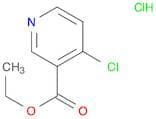
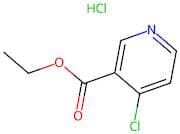
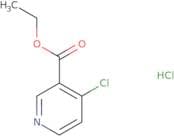
Ethyl 4-chloronicotinate hydrochloride (1:1) is a chemical compound characterized by its structure, which includes a chlorinated pyridine ring and an ethyl ester functional group. It is a derivative of nicotinic acid, where the chlorine atom is positioned at the 4th carbon of the pyridine ring. This compound typically appears as a white to off-white crystalline solid and is soluble in polar solvents such as water and ethanol, owing to the presence of the hydrochloride salt form. Ethyl 4-chloronicotinate hydrochloride is often utilized in organic synthesis and medicinal chemistry, particularly in the development of pharmaceuticals and agrochemicals. Its biological activity may include interactions with various biological targets, making it of interest for research in drug discovery. As with many chemical substances, handling should be done with care, following appropriate safety protocols to mitigate any potential hazards associated with its use.
Formula:C8H9Cl2NO2
InChI:InChI=1/C8H8ClNO2.ClH/c1-2-12-8(11)6-5-10-4-3-7(6)9;/h3-5H,2H2,1H3;1H
SMILES:CCOC(=O)c1cnccc1Cl.Cl
Sort by
Purity (%)
0
100
|
0
|
50
|
90
|
95
|
100
Found 4 products.
3-Pyridinecarboxylic acid, 4-chloro-, ethyl ester, hydrochloride (1:1)
CAS:Formula:C8H9Cl2NO2Purity:95%Color and Shape:SolidMolecular weight:222.0686Ethyl 4-chloronicotinate hydrochloride
CAS:Ethyl 4-chloronicotinate hydrochloridePurity:95%Molecular weight:222.07g/molEthyl 4-chloronicotinate hydrochloride
CAS:Formula:C8H9Cl2NO2Purity:>95%Color and Shape:SolidMolecular weight:222.074-Chloro-Nicotinic acid ethyl ester hydrochloride
CAS:4-Chloro-Niacin is a lead compound for the treatment of diabetes. The drug is an agonist of the G protein coupled receptor, which is involved in glucose homeostasis and insulin secretion. 4-Chloro-Niacin has been shown to decrease blood glucose levels in diabetic rats by activating the G protein coupled receptor, thereby increasing the release of insulin from pancreatic beta cells. This compound also has an affinity for pyridine nucleotide receptors, suggesting that it may be useful for treating metabolic syndromes.
Formula:C8H8ClNO2·HClPurity:Min. 95%Molecular weight:222.07 g/mol