CAS 17475-43-3
:2-Propylbenzenemethanol
Description:
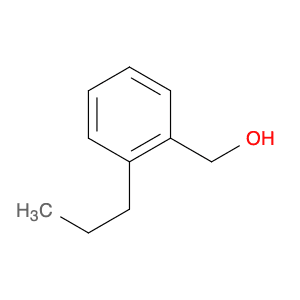
2-Propylbenzenemethanol, also known as 1-(2-propylphenyl)methanol, is an organic compound characterized by its structure, which features a propyl group attached to a benzene ring, with a hydroxymethyl group (-CH2OH) also connected to the benzene. This compound is typically a colorless to pale yellow liquid with a pleasant aromatic odor. It is soluble in organic solvents but has limited solubility in water due to its hydrophobic aromatic structure. The presence of the hydroxymethyl group contributes to its reactivity, allowing it to participate in various chemical reactions, such as oxidation and esterification. 2-Propylbenzenemethanol may be used in the synthesis of other organic compounds and can serve as an intermediate in the production of fragrances or pharmaceuticals. Safety data indicates that, like many organic solvents, it should be handled with care, as it may cause irritation to the skin and eyes. Proper storage and handling practices are essential to ensure safety and stability.
Formula:C10H14O
InChI:InChI=1S/C10H14O/c1-2-5-9-6-3-4-7-10(9)8-11/h3-4,6-7,11H,2,5,8H2,1H3
InChI key:InChIKey=ZAMZCSIXTWIEDY-UHFFFAOYSA-N
SMILES:C(CC)C1=C(CO)C=CC=C1
Synonyms:- Benzyl alcohol, o-propyl-
- 2-Propylbenzenemethanol
- Benzenemethanol, 2-propyl-
Sort by
Purity (%)
0
100
|
0
|
50
|
90
|
95
|
100
Found 2 products.
(2-Propylphenyl)methanol
CAS:2-Propylphenyl methy alcohol is a carboxylic acid that is used in the synthesis of esterification products. It reacts with an alcohol to form an ester. This reaction can be done by heating the carboxylic acid and the alcohol together, or by using a catalyst such as sulfuric acid. 2-Propylphenyl methy alcohol can also react with a reactive halogenated molecule to form an ether. This process is called hydrolysis, which is the breaking down of a compound through water molecules. 2-Propylphenyl methy alcohol will react with a chlorine atom to form a chloroalkoxide, which can then be used in another reaction.Formula:C10H14OPurity:Min. 95%Molecular weight:150.22 g/mol