CAS 1752-88-1
:3-PYRAZOLIDINONE HYDROCHLORIDE
Description:
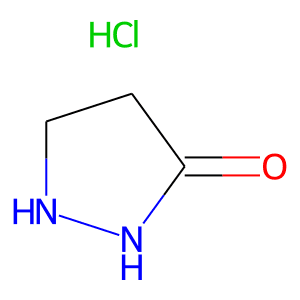
3-Pyrazolidinone hydrochloride is a chemical compound characterized by its pyrazolidinone structure, which features a five-membered ring containing two nitrogen atoms. This compound typically appears as a white to off-white crystalline solid and is soluble in water and alcohol, making it useful in various applications. It is often utilized in pharmaceutical research and development due to its potential biological activities, including anti-inflammatory and analgesic properties. The hydrochloride salt form enhances its stability and solubility, facilitating its use in medicinal formulations. As with many chemical substances, safety precautions should be observed when handling 3-pyrazolidinone hydrochloride, as it may pose health risks if ingested or inhaled. Proper storage conditions are also essential to maintain its integrity and efficacy. Overall, 3-pyrazolidinone hydrochloride is a compound of interest in both synthetic chemistry and pharmacology, contributing to the development of therapeutic agents.
Formula:C3H7ClN2O
InChI:InChI=1/C3H6N2O.ClH/c6-3-1-2-4-5-3;/h4H,1-2H2,(H,5,6);1H
SMILES:C1CNN=C1O.Cl
Synonyms:- 3-Pyrazolidinone Hcl
- 3-Pyrazolidinone Hydrachloride
- 3-Oxotetrahydro-1H-Pyrazol-1-Ium Chloride
- Timtec-Bb Sbb007977
- Tetrahydro-3H-Pyrazol-3-One Hydrochloride
- 3-PyrazolidinoneHCl,97%
- 4,5-dihydro-1H-pyrazol-3-ol
- Pyrazolidin-3-One Hydrochloride
Sort by
Purity (%)
0
100
|
0
|
50
|
90
|
95
|
100
Found 4 products.
Pyrazolidin-3-one hydrochloride
CAS:Pyrazolidin-3-one hydrochloridePurity:97%Molecular weight:122.55g/mol4,5-Dihydro-1H-pyrazol-3-ol hydrochloride
CAS:4,5-Dihydro-1H-pyrazol-3-ol hydrochloride (DHPE) is a potent inhibitor of the uptake and transport of serotonin in the rat brain. DHPE inhibits serotonin uptake by blocking the binding of serotonin to its transporter protein and also inhibits serotonin reuptake at the synapse. It is also an inhibitor of lysine hydroxylase, which converts lysine to catecholamine neurotransmitters. This inhibition leads to decreased levels of dopamine, norepinephrine and epinephrine, which can cause depression. DHPE binds to acidic amino acids such as glycine and glutamate, potentiating their actions on postsynaptic neurons. This effect may be due to increased synaptic activity or decreased inhibitory neurotransmitter release.br> br> The environment can affect the pharmacokinetics of DHPE. DHPE has been shown to have higher concentrations in acidic environments than basic environments because it is more solubleFormula:C3H6N2OPurity:Min. 95%Color and Shape:PowderMolecular weight:86.09 g/mol3-Pyrazolidinone hydrochloride
CAS:Formula:C3H7ClN2OPurity:97%Color and Shape:SolidMolecular weight:122.55