CAS 17527-79-6
:BIS(4-MERCAPTOPHENYL) ETHER
Description:
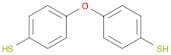
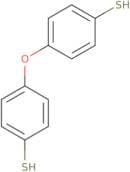
BIS(4-MERCAPTOPHENYL) ETHER, with the CAS number 17527-79-6, is an organic compound characterized by its structure, which features two 4-mercaptophenyl groups connected by an ether linkage. This compound is typically a solid at room temperature and exhibits a distinct aromatic character due to the presence of phenyl rings. The mercapto (-SH) groups contribute to its reactivity, making it a potential candidate for applications in materials science, particularly in the synthesis of polymers and as a ligand in coordination chemistry. The presence of sulfur in the mercapto groups also imparts unique properties, such as the ability to form disulfide bonds, which can be advantageous in various chemical processes. Additionally, BIS(4-MERCAPTOPHENYL) ETHER may exhibit antioxidant properties, making it of interest in biochemical applications. Safety data should be consulted for handling, as compounds with thiol groups can be sensitive to oxidation and may pose health risks if not managed properly.
Formula:C12H10OS2
InChI:InChI=1/C12H10OS2/c14-11-5-1-9(2-6-11)13-10-3-7-12(15)8-4-10/h1-8,14-15H
SMILES:c1cc(ccc1Oc1ccc(cc1)S)S
Synonyms:- Benzenethiol, 4,4'-Oxybis-
- 4,4'-Oxydibenzenethiol
Sort by
Purity (%)
0
100
|
0
|
50
|
90
|
95
|
100
Found 3 products.
Bis(4-mercaptophenyl)ether
CAS:Formula:C12H10OS2Purity:98%Color and Shape:SolidMolecular weight:234.3372Bis(4-mercaptophenyl)ether
CAS:<p>Bis(4-mercaptophenyl)ether is a chlorinated polycarbonate. It is soluble in organic solvents and reacts with nucleophiles, such as hydroxide or chloride ion, to form a tetrahydroxyethylene ether. Bis(4-mercaptophenyl)ether has been shown to polymerize at room temperature and heat to form polymers with viscosity of about 100 cps. These polymers are insoluble in water and are resistant to degradation by aqueous acids. The reaction products can be identified by their nmr spectra. Bis(4-mercaptophenyl)ether hydrolyzes in the presence of sodium hydroxide solution or tetrachloroethane. This hydrolysis leads to the formation of bis(2-hydroxyethyl)ethers and phenol, which can be easily removed from the reaction mixture by vacuum distillation. Bis(4-mercaptophenyl)ether is also</p>Formula:C12H10OS2Purity:Min. 95%Molecular weight:234.34 g/mol