CAS 175923-04-3
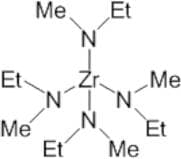
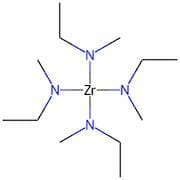
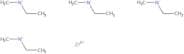
:TETRAKIS(ETHYLMETHYLAMINO)ZIRCONIUM
- Zirconium Tetrakis(Ethylmethylamide)
- Tetrakis(ethyl Methyl amido) zirconium
- Tetrakis(Ethylmethylamido)Zirconium(Iv)
- Tetrakis(Ethylmethylamino)Zirconium(Iv)
Tetrakis(ethylmethylamino)zirconium(IV), 99% TEMAZ
CAS:Tetrakis(ethylmethylamino)zirconium(IV), 99% TEMAZ
Formula:ZrN(CH3)(CH2CH3)Purity:99%Color and Shape:light yellow liq.Molecular weight:323.63Tetrakis(ethylmethylamino)zirconium 99.999%
CAS:Tetrakis(ethylmethylamino)zirconium 99.999%Purity:99.999%Tetrakis(ethylmethylamino)zirconium(IV) 99% TEMAZ, 40-1710, contained in 50 ml Swagelok® cylinder (96-1070) for CVD/ALD
CAS:Tetrakis(ethylmethylamino)zirconium(IV) 99% TEMAZ, 40-1710, contained in 50 ml Swagelok® cylinder (96-1070) for CVD/ALD
Formula:ZrN(CH3)(CH2CH3)Purity:99%Color and Shape:light yellow liq.Molecular weight:323.63Tetrakis(ethylmethylamino)zirconium(IV)
CAS:Tetrakis(ethylmethylamino)zirconium(IV) is a metal compound that reacts with water vapor and oxygen to form hydrogen gas. It has been shown to be luminous, with an emission spectrum peak at 490nm in the gaseous state. Tetrakis(ethylmethylamino)zirconium(IV) is a strong oxidizing agent that does not react with water vapor, but does react with oxygen. The rate of this reaction increases as the temperature increases, but it is inhibited by encapsulating it in magnesium oxide. This compound has been used in microscopy to detect water vapor in air and can also be used for the detection of lanthanum, which emits gamma rays when irradiated by a radioactive source. The mechanism of this reaction is not well understood, but it may involve the formation of an intermediate complex followed by a proton transfer and subsequent electron transfer from magnesium to zirconium oxide.
Formula:C12H32N4ZrPurity:Min. 95%Molecular weight:323.63 g/molEthanamine, N-methyl-, zirconium(4+) salt (4:1)
CAS:Formula:C12H32N4ZrPurity:99%Molecular weight:323.6333