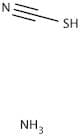
CAS 1762-95-4
:Ammonium thiocyanate
Description:
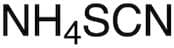
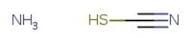
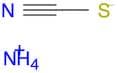
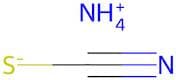
Ammonium thiocyanate, with the chemical formula NH4SCN and CAS number 1762-95-4, is an inorganic compound that appears as a white crystalline solid. It is highly soluble in water and exhibits hygroscopic properties, meaning it can absorb moisture from the air. This compound is known for its ability to dissociate into ammonium ions (NH4+) and thiocyanate ions (SCN-) in solution. Ammonium thiocyanate is commonly used in various applications, including as a fertilizer, in the production of certain pharmaceuticals, and in analytical chemistry as a reagent. It can also serve as a cryoprotectant in biological studies due to its ability to lower the freezing point of solutions. When heated, ammonium thiocyanate decomposes, releasing toxic gases such as ammonia and hydrogen sulfide. Safety precautions should be taken when handling this compound, as it can be harmful if ingested or inhaled. Overall, ammonium thiocyanate is a versatile chemical with significant utility in both industrial and laboratory settings.
Formula:CH4N2S
InChI:InChI=1/CHNO3S.H3N/c2-1-6(3,4)5;/h(H,3,4,5);1H3/p+1
InChI key:InChIKey=SOIFLUNRINLCBN-UHFFFAOYSA-N
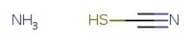
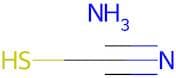
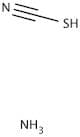
SMILES:C(#N)S.N
Synonyms:- Ammonium Thiocyanate Crystals
- Ammonium cyanide sulfide (NH<sub>4</sub>CNS)
- Ammonium isothiocyanate
- Ammonium rhodanate
- Ammonium rhodanide
- Ammonium sulfocyanate
- Ammoniumthiocyanat
- Rhodanid
- Thiocyanate d'ammonium
- Thiocyanic acid ammonium salt
- Thiocyanic acid, ammonium salt (1:1)
- Tiocianato De Amonio
- cyanosulfuric acid (HSO3), ammonium salt (1:1)
- Ammonium thiocyanate
- AMMONIUM THIOCYANAT
- Ammoniumrhodantate
- AMMONIUM RHODANIDE STANDARD SOLUTION
- AMMONIUM THIOCYANATE 98% AN
- usafek-p-433
- AMMONIUM THIOCYANATE STANDARD
- AMMONIUM SULFOCYANIDE
- AMMONIUM THIOCYANATE 0,1 MOL/L
- trans-aid
- Ammonium suffocyanide
- Ammoniumrhodonide
- AMMONIUM THIOCYANATE STANDARD SOLUTION &
- AMMONIUM THIOCYANATE TS
- See more synonyms
Sort by
Purity (%)
0
100
|
0
|
50
|
90
|
95
|
100
Found 12 products.
Ammonium Thiocyanate
CAS:Formula:NH4SCNPurity:>98.0%(T)Color and Shape:White to Almost white powder to crystalMolecular weight:76.12Ammonium thiocyanate, ACS, 97.5% min
CAS:Fertilizers, photography, fabric dyeing, zinc coating, electroplating, and as a separator of Zr and HfFormula:CH4N2SPurity:97.5%Molecular weight:76.12Ammonium thiocyanate, 98+%
CAS:Ammonium thiocyanate has many uses in manufacturing chemicals such as metal thiocyanates [CuSCN, Ca(SCN)2, NaSCN, KSCN] and in a number of pharmaceuticals. It is used in freezing solutions, pickling, printing, and as a corrosion inhibitor against acid gases. It is used in the photography industry asFormula:CH4N2SPurity:98+%Color and Shape:White to pale cream, Crystals or crystalline powderMolecular weight:76.12Thiocyanic acid, ammonium salt (1:1)
CAS:Formula:CH4N2SPurity:%Color and Shape:SolidMolecular weight:76.1209Ammonium thiocyanate
CAS:Ammonium thiocyanateFormula:·CNS·H4NPurity:98%Color and Shape: white crystalsMolecular weight:76.12g/molAmmonium thiocyanate
CAS:Formula:CH4N2SPurity:≥ 99.0% (anhydrous basis)Color and Shape:White crystals, very hygroscopicMolecular weight:76.12Ammonium Thiocyanate
CAS:Applications Ammonium thiocyanate is used in synthetic chemistry as a thiocyanation reagent. Ammonium thiocyanate is also a knwn plant poison and is used as a weed eradicant in the agricultural industry.
References Harvey, R.: Agronomy J.: 23, 944 (1931); Sandhoff, A. & Skinner, C.: Soil Sci., 48, 287 (1939); Wu, G., et al.: Tetrahedron Lett., 46, 5831 (2005)Formula:CNS·H4NColor and Shape:NeatMolecular weight:76.12Ammonium Thiocyanate ACS, 99%
CAS:Formula:NH4CNSPurity:min. 99%Color and Shape:White, Crystalline hygroscopic compund/deliquescent solid, Clear, ColourlessMolecular weight:76.12Ammonium Thiocyanate ACS, ExiPlus, Multi-Compendial, 99%
CAS:Formula:NH4CNSPurity:min. 99%Color and Shape:White, Crystalline hygroscopic compound, Clear, ColourlessMolecular weight:76.12Ammonium isothiocyanate
CAS:Ammonium thiocyanate is a natural compound that is found in the blood of humans and animals. It binds to an antigen-binding molecule and has been shown to be effective against infectious diseases. Ammonium thiocyanate is toxic, so it should only be administered as a last resort for treatment. The toxicity of ammonium thiocyanate can be reduced by complexing with copper chloride or zirconium oxide. Ammonium thiocyanate has also been shown to have high redox potentials, which are indicative of its ability to donate electrons. These properties make ammonium thiocyanate an ideal candidate for use in electrochemical impedance spectroscopy experiments.Formula:CH4N2SPurity:Min. 95%Color and Shape:PowderMolecular weight:76.12 g/mol