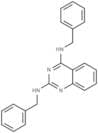
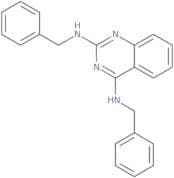
CAS 177355-84-9
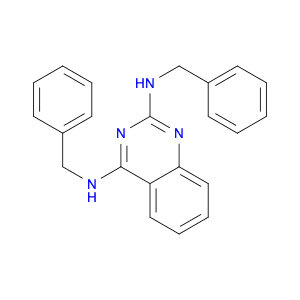
:2,4-Quinazolinediamine, N,N'-bis(phenylmethyl)-
Description:
2,4-Quinazolinediamine, N,N'-bis(phenylmethyl)-, identified by CAS number 177355-84-9, is an organic compound characterized by its quinazoline core structure, which consists of a fused bicyclic system containing both benzene and pyrimidine rings. This compound features two amine groups at the 2 and 4 positions of the quinazoline ring, which can participate in hydrogen bonding and may influence its reactivity and solubility. The presence of two phenylmethyl groups attached to the nitrogen atoms enhances its lipophilicity, potentially affecting its biological activity and interaction with other molecules. Typically, such compounds may exhibit properties relevant to medicinal chemistry, including potential applications in pharmaceuticals or as intermediates in organic synthesis. The specific characteristics, such as melting point, boiling point, and solubility, would depend on the molecular interactions and the environment in which the compound is studied. Overall, 2,4-Quinazolinediamine, N,N'-bis(phenylmethyl)- is of interest for its structural features and potential applications in various chemical and biological contexts.
Formula:C22H20N4
Sort by
Purity (%)
0
100
|
0
|
50
|
90
|
95
|
100
Found 6 products.
N,N'-Dibenzylquinazoline-2,4-Diamine
CAS:N,N'-Dibenzylquinazoline-2,4-DiaminePurity:99%+Molecular weight:340.42g/molDBeQ
CAS:Formula:C22H20N4Purity:>98.0%(HPLC)Color and Shape:White to Light yellow powder to crystalMolecular weight:340.43DBEQ
CAS:DBEQ (JRF 12) is a selective, potent, reversible, and ATP-competitive p97 inhibitor.Formula:C22H20N4Purity:98.93% - ≥95%Color and Shape:SolidMolecular weight:340.42Ref: TM-T1969
2mg34.00€5mg52.00€1mL*10mM (DMSO)52.00€10mg85.00€25mg152.00€50mg264.00€100mg334.00€200mg494.00€DBeQ
CAS:DBeQ is a small molecule that has been shown to inhibit autophagy. It binds to the hydroxyl group of the ATP synthase and inhibits ATP synthesis, leading to an accumulation of adenosine monophosphate (AMP). DBeQ also affects protein transport by inhibiting the function of certain proteins involved in vesicle trafficking. It has been shown to have clinical relevance in treating hyperproliferative diseases, such as lung damage, and infectious diseases. This drug may be used as a chemical inhibitor or a chemical biology tool for drug repositioning.Formula:C22H20N4Purity:Min. 95%Molecular weight:340.42 g/mol