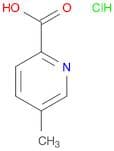
CAS 177359-60-3
:5-Methylpyridine-2-carboxylic acid hydrochloride
Description:
5-Methylpyridine-2-carboxylic acid hydrochloride is a chemical compound characterized by its pyridine ring structure, which is substituted with a methyl group and a carboxylic acid functional group. This compound typically appears as a white to off-white crystalline solid and is soluble in water and various organic solvents, reflecting its polar nature due to the carboxylic acid group. The presence of the hydrochloride indicates that it is a salt formed with hydrochloric acid, which can enhance its solubility and stability. It is often used in organic synthesis and pharmaceutical applications, serving as an intermediate in the production of various bioactive compounds. The compound's molecular structure contributes to its reactivity, making it a valuable building block in medicinal chemistry. Additionally, it may exhibit specific biological activities, although detailed studies would be necessary to elucidate its pharmacological properties. Safety data should be consulted for handling and usage, as with any chemical substance.
Sort by
Purity (%)
0
100
|
0
|
50
|
90
|
95
|
100
Found 4 products.
2-Pyridinecarboxylic acid, 5-methyl-, hydrochloride (1:1)
CAS:Formula:C7H8ClNO2Purity:95%Color and Shape:SolidMolecular weight:173.59695-Methylpicolinic acid hydrochloride
CAS:5-Methylpicolinic acid hydrochloridePurity:97%Molecular weight:173.60g/mol5-Methylpyridine-2-carboxylic acid hydrochloride
CAS:5-Methylpyridine-2-carboxylic acid hydrochloride (5MP) is a chemical compound that can be used in the production of picolinic acid, which is an intermediate for aminophenols. The reaction with aminophenols is catalyzed by 5MP. In the presence of 2-aminophenol, picolinic acid can be produced. The reaction is also catalyzed by bacteria such as escherichia coli and escherichia. 5MP has been used in biotechnology for the production of antibiotics, enzymes, hormones, and other pharmaceuticals. In microbiology, it is used to produce a variety of products including antibiotics, enzymes, hormones, and other pharmaceuticals. It can also be used as a substrate to produce antimicrobials such as escherichia coli and escherichia.
Formula:C7H8ClNO2Purity:Min. 95%Molecular weight:173.6 g/mol