CAS 1784751-20-7
:CK1-IN-1
Description:
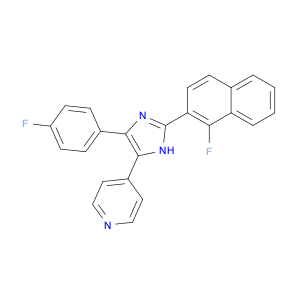
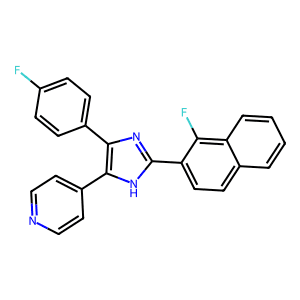
CK1-IN-1, with the CAS number 1784751-20-7, is a small molecule inhibitor that specifically targets casein kinase 1 (CK1), a serine/threonine kinase involved in various cellular processes, including cell signaling and circadian rhythm regulation. This compound is characterized by its ability to modulate CK1 activity, which can influence pathways related to cancer, neurodegenerative diseases, and other conditions. CK1-IN-1 is typically studied in the context of its potential therapeutic applications, particularly in oncology, where aberrant CK1 activity is often implicated. The compound is usually characterized by its molecular structure, which includes specific functional groups that contribute to its binding affinity and selectivity for CK1. In research settings, CK1-IN-1 is utilized to explore the biological effects of CK1 inhibition, providing insights into the kinase's role in various signaling pathways and its potential as a drug target. As with many small molecule inhibitors, the pharmacokinetics, bioavailability, and toxicity profiles are also important characteristics that are evaluated during its development and application in scientific studies.
Formula:C24H15F2N3
Synonyms:- Pyridine, 4-[2-(1-fluoro-2-naphthalenyl)-4-(4-fluorophenyl)-1H-imidazol-5-yl]-
- PUN51207
- CK1-IN-1
- CK1 inhibitor 1
Sort by
Purity (%)
0
100
|
0
|
50
|
90
|
95
|
100
Found 4 products.
CK1-IN-1
CAS:CK1-IN-1, a CK1 inhibitor with IC50: 15nM CK1δ, 16nM CK1ε, 73nM p38σ; patent WO2015119579A1.Formula:C24H15F2N3Purity:98.79%Color and Shape:SolidMolecular weight:383.39Ref: TM-T5393
1mg49.00€2mg65.00€5mg97.00€10mg160.00€25mg305.00€50mg472.00€100mg707.00€1mL*10mM (DMSO)106.00€CK1-IN-1
CAS:CK1-IN-1 is a research tool that can be used to study the function of ion channels and receptors. This compound is a ligand that binds to cell surface receptors and activates them, thereby initiating biological responses. CK1-IN-1 also inhibits the activity of protein kinase C (PKC) by binding to PKC and preventing it from phosphorylating its substrates. It has been shown to inhibit the activity of various ion channels, including sodium channels, potassium channels, calcium channels, and chloride channels. The inhibition of these ion channels leads to an increase in the membrane potential, which can lead to epileptic seizures. This compound is highly pure with a purity level greater than 99%.
Formula:C24H15F2N3Purity:Min. 95%Molecular weight:383.39 g/mol