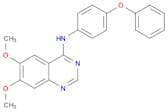
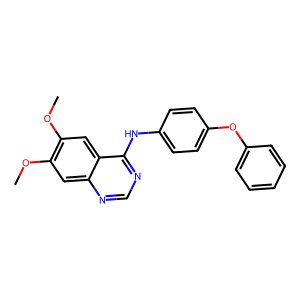
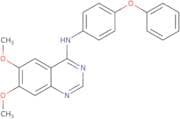
CAS 179248-59-0
:4-Quinazolinamine, 6,7-dimethoxy-N-(4-phenoxyphenyl)-
Description:
4-Quinazolinamine, 6,7-dimethoxy-N-(4-phenoxyphenyl)-, identified by its CAS number 179248-59-0, is a synthetic organic compound that belongs to the quinazoline class of heterocyclic compounds. It features a quinazolinamine core, which is characterized by a fused bicyclic structure containing both benzene and pyrimidine rings. The presence of methoxy groups at the 6 and 7 positions enhances its solubility and may influence its biological activity. The N-(4-phenoxyphenyl) substituent introduces additional aromatic character, potentially affecting the compound's interactions with biological targets. This compound may exhibit various pharmacological properties, making it of interest in medicinal chemistry. Its structural features suggest potential applications in drug development, particularly in areas such as oncology or neurology, where quinazoline derivatives have shown promise. However, specific biological activities, toxicity, and pharmacokinetic profiles would require further investigation through experimental studies to fully understand its potential applications and safety profile.
Formula:C22H19N3O3
Sort by
Purity (%)
0
100
|
0
|
50
|
90
|
95
|
100
Found 5 products.
4-Quinazolinamine, 6,7-dimethoxy-N-(4-phenoxyphenyl)-
CAS:Formula:C22H19N3O3Purity:%Color and Shape:SolidMolecular weight:373.40466,7-Dimethoxy-N-(4-Phenoxyphenyl)Quinazolin-4-Amine
CAS:6,7-Dimethoxy-N-(4-Phenoxyphenyl)Quinazolin-4-AminePurity:99%Molecular weight:373.40g/molSrc Inhibitor 1
CAS:Src Inhibitor 1 (Src Kinase Inhibitor 1) is a potent and selective dual site Src tyrosine kinase inhibitor.Formula:C22H19N3O3Purity:99.68% - >99.99%Color and Shape:SolidMolecular weight:373.4Ref: TM-T3593
1mL*10mM (DMSO)To inquire2mg38.00€5mg56.00€10mg94.00€25mg172.00€50mg268.00€100mg429.00€200mg615.00€Src Inhibitor 1
CAS:Src Inhibitor 1 (SI1) is a molecule that inhibits the activity of src, which is a tyrosine kinase. It has been shown to inhibit the growth of cancer cells and reduce the mitochondrial membrane potential in cardiac cells. Src inhibitor 1 also inhibits protein synthesis and reduces inflammation in mice by blocking epidermal growth factor receptor signaling. SI1 binds to ATP and blocks its binding to DNA, thereby inhibiting DNA synthesis. This inhibition can be reversed by adding dNTPs or dextran sulfate. SI1 has also been shown to have antioxidant effects by inducing mitochondrial superoxide dismutase activity.
Formula:C22H19N3O3Purity:Min. 95%Molecular weight:373.4 g/mol