CAS 1796-27-6
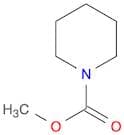
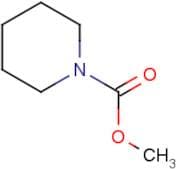
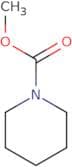
:methyl piperidine-1-carboxylate
Description:
Methyl piperidine-1-carboxylate is an organic compound characterized by its piperidine ring structure, which is a six-membered nitrogen-containing heterocycle. This compound features a carboxylate functional group, specifically an ester, where the carboxylic acid is methylated. It typically appears as a colorless to pale yellow liquid with a distinctive odor. Methyl piperidine-1-carboxylate is soluble in organic solvents such as ethanol and ether, but its solubility in water is limited due to its hydrophobic piperidine ring. The compound is often utilized in organic synthesis, particularly in the preparation of various pharmaceuticals and agrochemicals, owing to its ability to act as a building block in chemical reactions. It is important to handle this substance with care, as it may pose health risks if inhaled or ingested, and appropriate safety measures should be taken during its use in laboratory settings.
Formula:C7H13NO2
InChI:InChI=1/C7H13NO2/c1-10-7(9)8-5-3-2-4-6-8/h2-6H2,1H3
SMILES:COC(=O)N1CCCCC1
Synonyms:- N-methoxycarbonylpiperidine
Sort by
Purity (%)
0
100
|
0
|
50
|
90
|
95
|
100
Found 5 products.
1-Piperidinecarboxylic acid, methyl ester
CAS:Formula:C7H13NO2Purity:98%Color and Shape:LiquidMolecular weight:143.1836Methyl piperidine-1-carboxylate
CAS:Methyl piperidine-1-carboxylatePurity:98%Molecular weight:143.18g/molMethyl Piperidine-1-carboxylate
CAS:Controlled Product<p>Applications METHYL PIPERIDINE-1-CARBOXYLATE (cas# 1796-27-6) is a useful research chemical.<br></p>Formula:C7H13NO2Color and Shape:NeatMolecular weight:143.18METHYL PIPERIDINE-1-CARBOXYLATE
CAS:Formula:C7H13NO2Purity:98%Color and Shape:LiquidMolecular weight:143.186Methyl piperidine-1-carboxylate
CAS:<p>Methyl piperidine-1-carboxylate is a synthetic chemical that is used as a stabilizer. It inhibits the hyperproliferation of cancer cells by blocking the activation of protein kinase C. Methyl piperidine-1-carboxylate also inhibits the growth of bacteria, such as Staphylococcus aureus, by interfering with their metabolic pathways. This chemical has been synthesized in an organic reaction and is an analog to ansamycin.</p>Formula:C7H13NO2Purity:Min. 95%Molecular weight:143.18 g/mol